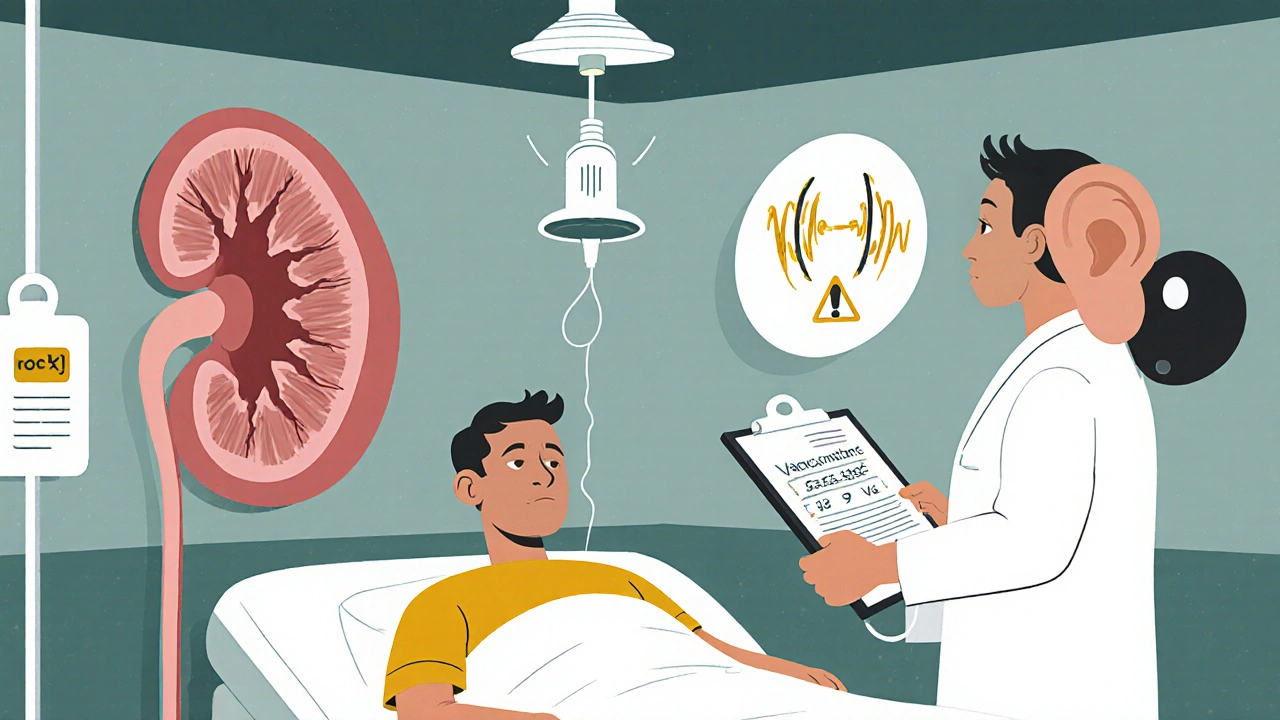
Vancomycin Toxicity: Signs, Risks, and How to Stay Safe
When you take vancomycin, a powerful antibiotic used for serious bacterial infections like MRSA. Also known as Vancocin, it’s often a last-line defense when other drugs fail—but it carries real risks if not used carefully. Vancomycin toxicity isn’t rare, especially in older adults or people with kidney problems. It can sneak up slowly, damaging your kidneys over days or weeks, or hit fast with a terrifying reaction called red man syndrome, a histamine-driven flush, itching, and low blood pressure that happens during infusion. These aren’t just side effects—they’re warning signs that your body can’t handle the dose or speed of delivery.
Most cases of vancomycin toxicity happen because the drug builds up in your system. Your kidneys filter it out, but if they’re already weak from age, diabetes, or other meds like NSAIDs or diuretics, vancomycin sticks around too long. That’s when you start seeing trouble: hearing loss, dizziness, or a drop in urine output. Even a slight change in how much you pee can mean your kidneys are struggling. Doctors check blood levels to keep vancomycin in the safe zone, but if you’re on it for more than a few days, you need regular kidney tests. No one should take this drug without monitoring.
Red man syndrome is different—it’s not an allergy, but it feels like one. It usually hits during the first infusion if the drug goes in too fast. Slowing the drip, giving antihistamines first, and making sure you’re well-hydrated can stop it cold. But if you’ve had it once, you’re more likely to get it again. That’s why nurses watch you closely during the first hour. And if you’re on vancomycin with other drugs that hurt the kidneys—like amphotericin B or certain chemotherapy agents—you’re at double the risk. Always tell your doctor what else you’re taking.
Some people think vancomycin is safe because it’s old and widely used. But that’s exactly why it’s dangerous. People assume it’s harmless, skip blood tests, or push through symptoms like ringing in the ears or fatigue. Those aren’t normal. They’re your body screaming for help. Vancomycin isn’t a drug you take lightly—it’s a tool for life-threatening infections, and it demands respect.
Below, you’ll find real guides from people who’ve dealt with vancomycin toxicity, kidney damage, and unexpected reactions. Some learned the hard way. Others found ways to prevent it. Whether you’re on this drug now, or just worried about what’s in your prescription, these posts give you the facts without the fluff. Know the signs. Ask the right questions. And don’t let silence cost you your health.