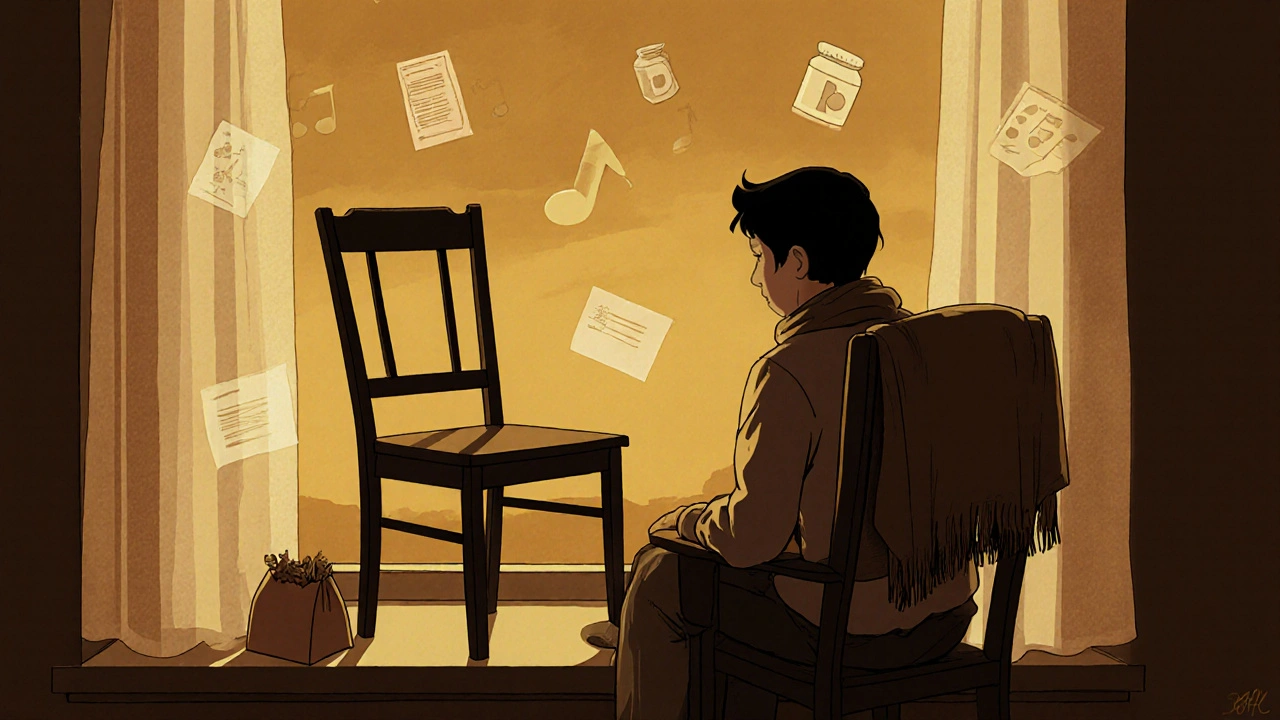
When ovarian cancer takes someone you love, the grief doesn’t wait for treatment to end. It doesn’t care if the chemotherapy is finished or if the scans came back clear. Grief shows up in the quiet moments-when you walk past the grocery store they loved, when you hear a song they sang, or when you wake up and remember they’re not coming back. This isn’t just sadness. It’s a deep, reshaping kind of loss that changes how you move through the world.
You’re Not Alone in This Kind of Grief
More than 19,000 women in the U.S. are diagnosed with ovarian cancer each year. About 13,000 die from it. That’s a lot of families left behind. Yet, people often don’t know what to say. They might say, “They’re in a better place,” or “At least it’s over.” Those words don’t heal. They isolate. The truth is, losing someone to ovarian cancer is different. It’s often slow. It’s messy. You watch someone you love fade over months or years. You become their caregiver, their advocate, their voice. And when they’re gone, you’re left with guilt, exhaustion, and a silence that feels louder than any hospital machine.
Studies from the National Cancer Institute show that caregivers of ovarian cancer patients have higher rates of depression and anxiety than caregivers of people with other cancers. Why? Because ovarian cancer hides. It doesn’t show up on routine tests. Symptoms are vague-bloating, fatigue, indigestion. By the time it’s found, it’s often advanced. That means families don’t get time to prepare. The diagnosis hits like a storm with no warning.
What Grief Looks Like After Ovarian Cancer
Grief doesn’t follow a checklist. There’s no five-stage model that fits real life. For many, it’s not tears every day. It’s numbness. It’s forgetting to eat. It’s screaming into a pillow at 3 a.m. It’s avoiding the bathroom because that’s where they used to sit. It’s seeing a woman in a wig and breaking down in the parking lot.
Some people feel guilty for surviving. Others feel angry-at the doctors, at the system, at God, at themselves. “I should’ve pushed harder.” “I didn’t notice the symptoms sooner.” “Why didn’t they listen to me?” These thoughts aren’t rational. But they’re real. And they don’t go away just because someone tells you to “stay strong.”
One woman I spoke with, Lisa, lost her sister to stage IV ovarian cancer after three years of treatment. “I cried for six months straight,” she said. “Then I stopped crying. And that scared me more than the tears.” That’s normal. Grief changes shape. It doesn’t vanish. It just learns how to live with you.
Where to Find Support That Actually Helps
Generic grief groups don’t always cut it. Not everyone understands what it’s like to lose someone to ovarian cancer. You need people who know the specifics-the jargon, the treatments, the emotional whiplash of remission and recurrence.
Organizations like the Ovarian Cancer Research Alliance and OVATION offer peer-led support groups specifically for survivors and bereaved family members. These aren’t therapy sessions. They’re real conversations. You can say, “I hated watching her lose her hair,” and someone will nod and say, “I did too. And then I started buying her scarves.” That kind of connection matters.
Online forums like the Ovarian Cancer National Alliance’s message boards are full of people who’ve walked this path. You can ask, “How did you handle the anniversary of their last chemo?” and get 20 honest answers. No sugarcoating. No platitudes.
Therapists who specialize in cancer grief are rare but worth finding. Look for someone certified in trauma-informed care or palliative care counseling. Ask if they’ve worked with families after ovarian cancer deaths. If they say, “I’ve helped people through loss,” walk away. That’s too vague.
How to Talk to Kids About the Loss
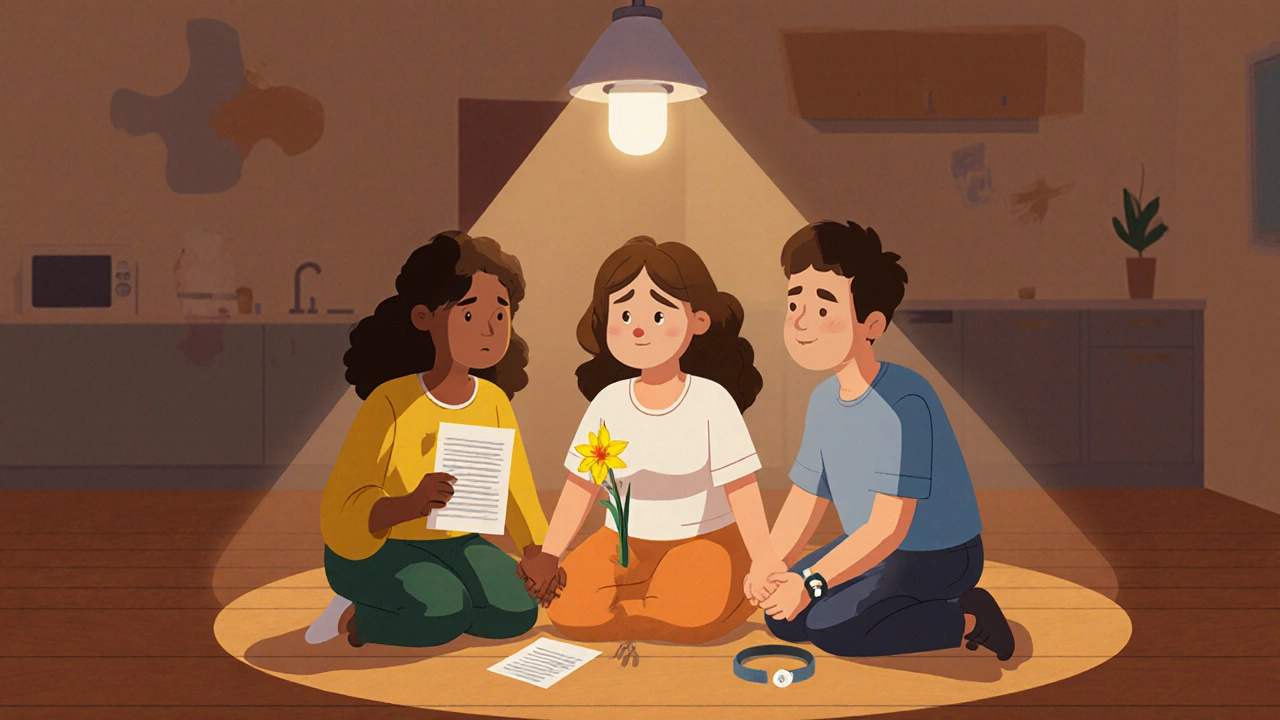
Children process grief differently. They don’t cry all day. They draw pictures. They ask, “When is Mom coming back?” They act out. They get angry at school. They won’t talk unless you start.
Don’t shield them. Don’t say, “She’s sleeping.” Say, “Her body stopped working. The doctors tried everything, but the cancer was too strong.” Use the word “cancer.” Don’t be afraid of it. Kids aren’t scared of the word. They’re scared of silence.
Keep routines. Offer choices. “Do you want to wear your favorite shirt today?” “Should we light a candle for her at dinner?” These small things give them control when everything else feels out of it.
There are books made for this. When Someone Has a Very Serious Illness by Marge Heegaard is one of the few that speaks honestly without being scary. Read it with them. Let them ask questions. Let them be quiet. Let them be angry.
How to Honor Them Without Getting Stuck
Some people keep every photo, every pill bottle, every hospital bracelet. Others clear the room the day after the funeral. Neither is right. There’s no rulebook.
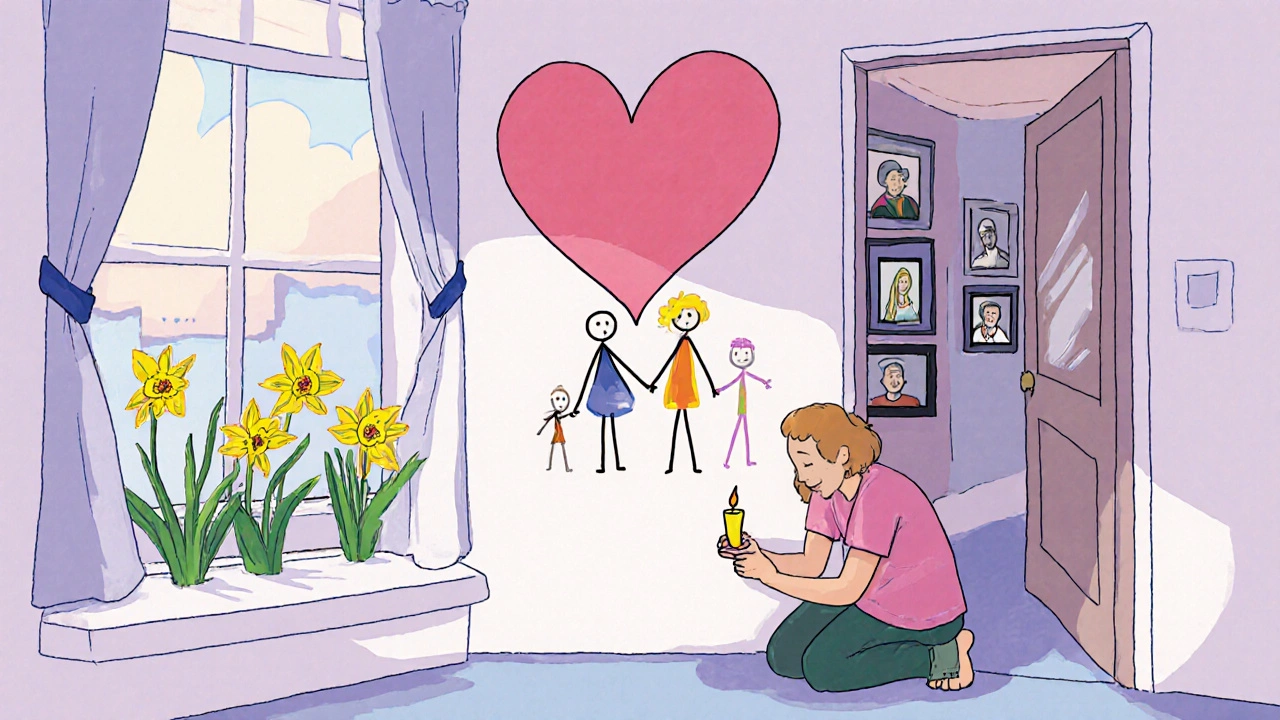
One man I met, David, started planting daffodils every spring-his wife’s favorite flower. He didn’t do it for anyone else. He did it because it made him feel close to her. Another woman, Maria, started writing letters to her daughter every birthday. She never sent them. She just wrote them. Then she burned them. “It’s my way of talking to her,” she said.
You don’t have to turn their memory into a shrine. But you also don’t have to forget. Find a ritual that feels true to you. Light a candle. Donate their clothes. Cook their favorite meal once a month. Talk to them out loud. Say, “I miss you.” Say, “I’m still here.”
When Grief Turns Into Something More
It’s okay to feel like you’re drowning. But if you can’t get out of bed for weeks. If you stop eating. If you think about joining them. If you feel like you’re losing your mind-you need help. That’s not weakness. That’s survival.
Depression after loss is common. But it’s not normal to stay there. If you’ve had trouble sleeping for more than a month, or if you’ve lost interest in everything you used to love, talk to a doctor. Antidepressants can help. Therapy can help. Talking to someone who’s been there can help.
The National Suicide & Crisis Lifeline is available 24/7. Call or text 988. You don’t have to carry this alone. You don’t have to be brave. You just have to reach out.
What Comes After the First Year
The first year is the hardest. Holidays, birthdays, anniversaries-they all hit like a punch. But after a year, something shifts. You don’t feel as raw. The pain doesn’t disappear, but it changes. You start to laugh again. You remember them and smile instead of cry.
That doesn’t mean you forgot. It means you’re learning how to carry them with you.
Some people volunteer for ovarian cancer organizations. Others start blogs. Some just live. That’s enough. You don’t have to turn your grief into a cause. You don’t have to be an advocate. You just have to keep breathing.
There’s no timeline. No right way. No finish line. But there is hope-not because life goes back to normal, but because you learn how to live with the new normal. And that’s more than enough.
How long does grief last after losing someone to ovarian cancer?
There’s no set time. For some, the sharpest pain fades after 6 to 12 months. For others, it lingers for years. Grief doesn’t end-it evolves. You learn to carry it. You don’t get over it. You learn how to live with it.
Is it normal to feel guilty after losing someone to ovarian cancer?
Yes. Many people blame themselves-“I didn’t push for tests,” “I thought it was just gas,” “I should’ve been there more.” These thoughts are common, but they’re not facts. Ovarian cancer is hard to detect early. Even doctors miss it. Your guilt doesn’t mean you failed. It means you loved deeply.
Should I attend ovarian cancer awareness events?
Only if it feels right. Some find comfort in walks, fundraisers, or candlelight vigils. Others find them overwhelming. There’s no obligation. Your grief belongs to you. Do what helps you heal, not what others expect.
Can I still feel close to my loved one after they’re gone?
Absolutely. You can talk to them. You can keep their favorite mug. You can wear their jacket. You can tell stories about them. They’re still part of your life. You don’t have to let go to move forward.
When should I seek professional help for my grief?
If you can’t sleep, eat, or get out of bed for more than two weeks. If you’re using alcohol or drugs to cope. If you think about ending your life. These aren’t signs of weakness-they’re signs you need support. Reach out to a therapist, a support group, or call 988. You deserve help.
Evan Brady
November 20, 2025
Let me tell you something nobody says out loud: grief after ovarian cancer isn’t about losing a person-it’s about losing the future you both imagined. The grocery lists. The inside jokes about bad TV. The way they’d hum off-key in the shower. That’s the real ghost. Not the empty bed. Not the silence. It’s the absence of tomorrow’s small things. And yeah, the medical system failed them. But we’re still here, trying to stitch meaning into the wreckage. That’s not weakness. That’s the quietest kind of courage.
Hannah Blower
November 21, 2025
Ugh. Another performative grief piece. You know what’s worse than ovarian cancer? People who monetize trauma with poetic fluff. ‘Light a candle’? ‘Write letters’? Please. Real people don’t have time for this. They’re working two jobs, paying medical debt, and wondering if their insurance will cover the next round of chemo. Stop romanticizing suffering. Fix the system. Not your damn daffodils.
Alex Boozan
November 21, 2025
There’s a reason ovarian cancer kills more than breast cancer despite less awareness. It’s because the medical-industrial complex doesn’t profit from early detection-there’s no lucrative screening protocol. Big Pharma wants late-stage patients. More chemo. More scans. More bills. The ‘vague symptoms’ narrative? That’s not ignorance. That’s design. And now we’re supposed to light candles while the machine keeps grinding?
Emily Entwistle
November 23, 2025
So you’re telling me the answer to losing someone to a disease that kills 13k a year is… to buy scarves and burn letters? Cool. Meanwhile, in Nigeria, women are dying because a pap smear costs more than their weekly food budget. You think your daffodils matter when the system doesn’t even let them get diagnosed? This isn’t healing. It’s emotional tourism.
Ancel Fortuin
November 24, 2025
Of course you’re supposed to feel guilty. That’s the point. The system wants you to blame yourself so you don’t blame them. They’ll let you cry into your pillow but won’t fund a single research grant. They’ll give you a support group but not a single drug that works. Grief is just the side effect of capitalism letting people die slowly so shareholders can sleep at night. Wake up.
Bruce Bain
November 25, 2025
I lost my mom to this. She didn’t want candles. She wanted pancakes on Sundays. So I make pancakes every Sunday. No ritual. No post. Just me, a griddle, and her favorite syrup. That’s it. No one needs to know. It’s mine. And it’s enough.
Jonathan Gabriel
November 26, 2025
Wait-so the solution to systemic medical neglect is… *emotional rituals*? That’s like treating a broken leg with affirmations. I get the sentiment. But if you’re not lobbying for mandatory CA-125 screening for women over 35, or pushing for Medicaid to cover transvaginal ultrasounds, then your ‘letters’ are just a distraction. Grief is real. But so is the fact that 70% of ovarian cancer deaths are preventable with early detection. Why aren’t we screaming about that?
Duncan Prowel
November 28, 2025
While I appreciate the empathetic tone of this exposition, one must interrogate the epistemological underpinnings of the presented ‘grief narrative.’ Is the notion of ‘carrying’ grief a culturally contingent construct, or a biologically determined response? The reliance on anecdotal testimony-Lisa, David, Maria-while emotionally compelling, lacks statistical grounding. One might posit that the ‘new normal’ is merely an adaptive coping mechanism in the absence of structural intervention. A more rigorous discourse is warranted.
Don Angel
November 29, 2025
Thank you. For real. I read this after my sister passed last month. I didn’t cry for three weeks. I just… didn’t. Then I found myself staring at her coffee mug. I didn’t wash it. I just kept it on the counter. People said, ‘You should let it go.’ But I didn’t want to. This piece? It didn’t tell me what to do. It just said it’s okay to not know. That’s all I needed.
Gregory Gonzalez
November 30, 2025
Oh, so now we’re assigning meaning to grief like it’s a TED Talk? ‘Burn letters to talk to them’? That’s not healing. That’s performance art for people who can afford therapy and have time to light candles. Meanwhile, my cousin’s widow is cleaning toilets at 6 a.m. to pay off $80k in medical bills. Your daffodils won’t pay her rent. Your ‘rituals’ won’t fix a broken healthcare system. Stop turning grief into a Pinterest board.
benedict nwokedi
December 2, 2025
Who funded this article? The Ovarian Cancer Research Alliance? The same group that lobbied against mandatory screening because ‘it causes false positives’? The same group that partnered with Big Pharma to push expensive, ineffective treatments? This isn’t support. It’s propaganda wrapped in soft language. You’re not helping. You’re distracting. The real enemy isn’t grief. It’s the industry that profits from it.
Emily Entwistle
December 3, 2025
Y’all need to stop overthinking this 😔 I lost my mom too. I still wear her hoodie. I still talk to her when I drive. I still cry when I see a woman with her same laugh. That’s not ‘emotional tourism.’ That’s love. And if you’re too busy being angry at the system to let yourself feel, then you’re the one who’s lost. 💔
Ram tech
December 3, 2025
bro why so much text. just say you miss them. also why do u think this cancer is so deadly? because people dont go to doc till its too late. also i think the whole ‘grief is different’ thing is just woke nonsense. grief is grief. just cry and move on.