Vancomycin Side Effects: What You Need to Know Before Taking It
When you’re prescribed vancomycin, a powerful intravenous antibiotic used to treat serious bacterial infections like MRSA and Clostridioides difficile. Also known as Vancocin, it’s often a last-resort drug when other antibiotics fail. It saves lives—but it’s not gentle. Vancomycin can cause serious side effects, and many people don’t realize how common or dangerous they can be until it’s too late.
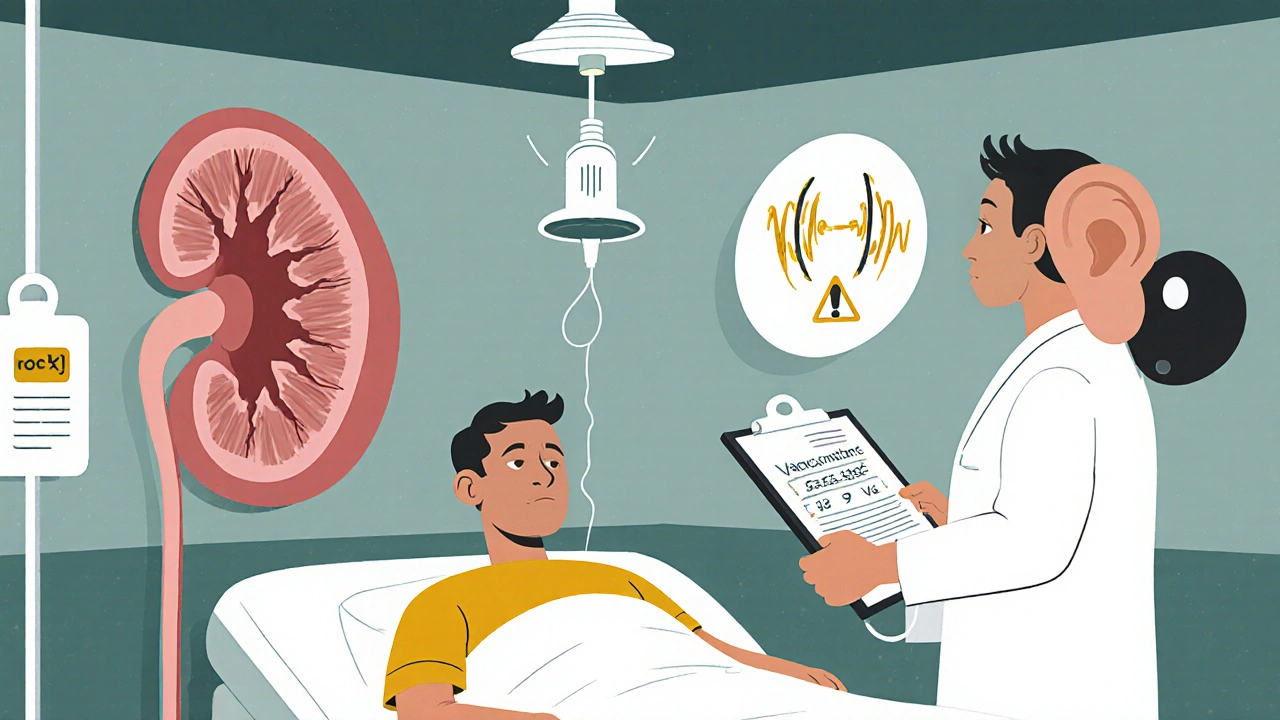
One of the most recognizable issues is red man syndrome, a reaction caused by too-fast infusion of vancomycin that leads to flushing, itching, and a red rash across the face and upper body. It’s not an allergy—it’s a histamine release—and it’s totally preventable by slowing down the drip. Doctors know this, but if you’re in the ER or hospital and the nurse rushes the bag, you could end up feeling like you’re burning up. If you’ve ever had this happen, you’ll remember it. Other common problems include kidney damage, a risk that increases with longer use, older age, or if you’re already on other kidney-stressing drugs like NSAIDs or certain blood pressure meds. Blood tests to check kidney function aren’t optional—they’re essential. And then there’s hearing loss. Not always obvious at first, but vancomycin can quietly damage your inner ear, leading to ringing in the ears or trouble hearing high pitches. It’s rare, but permanent.
What makes vancomycin tricky is that its side effects don’t always show up right away. You might feel fine for days, then suddenly feel dizzy, nauseous, or notice your urine has changed color. That’s not normal. The drug builds up in your system, especially if your kidneys aren’t filtering well. That’s why monitoring isn’t just a formality—it’s a safety net. And if you’re on vancomycin for more than a week, your doctor should be checking your blood levels regularly. Too little and the infection won’t clear. Too much and you risk permanent harm.
Some people think antibiotics are safe because they’re prescribed. But vancomycin isn’t like amoxicillin. It’s a heavy hitter. If you’re taking it, you need to know the signs: skin rash, hearing changes, reduced urine output, unexplained fatigue, or fever that doesn’t go away. These aren’t just side effects—they’re red flags. And if you’re caring for someone on vancomycin, pay attention. They might not notice the subtle changes themselves.
Below, you’ll find real-world guides from people who’ve been through it—how to manage nausea, what to ask your pharmacist, how to spot early kidney trouble, and what alternatives exist if vancomycin is too risky for you. These aren’t theoretical tips. They’re from patients, nurses, and doctors who’ve seen the fallout and learned how to avoid it.