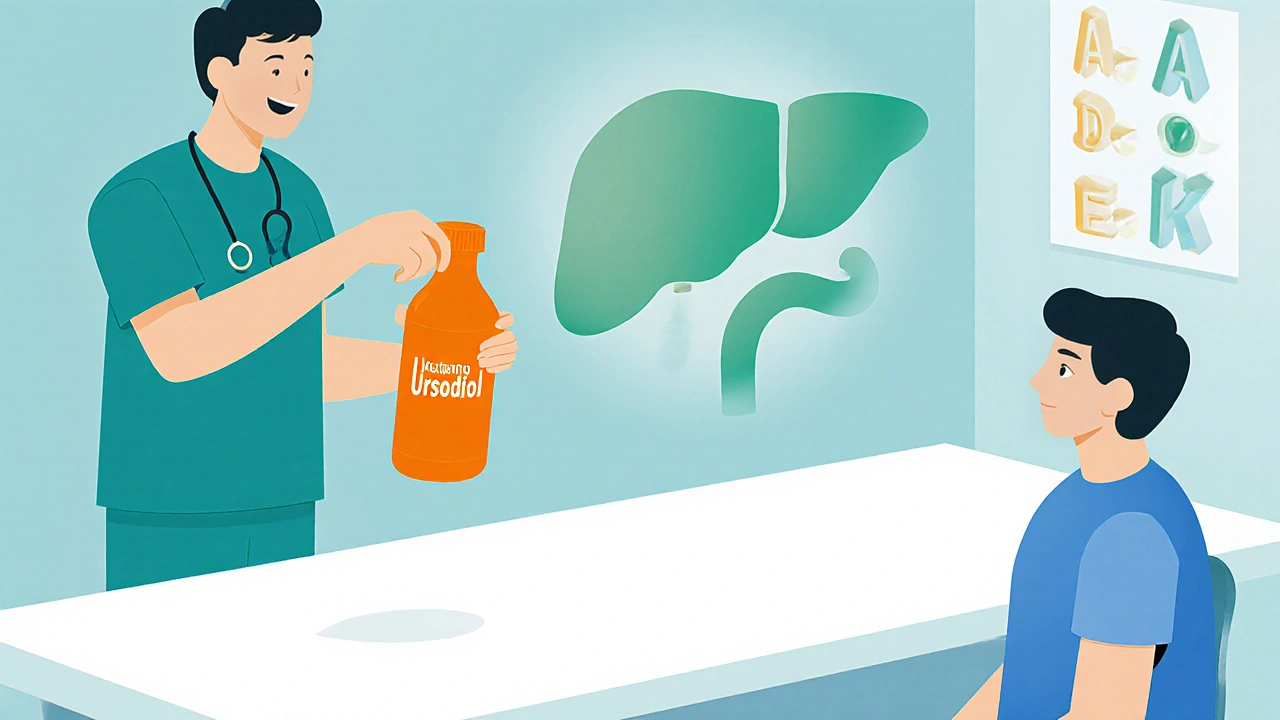
When a doctor prescribes Ursodiol for cholestatic liver disease, the focus often lands on liver enzymes and symptom relief. Yet, many patients overlook a silent threat that rides alongside the medication: vitamin deficiencies. In liver disease, malabsorption, altered bile flow, and the disease itself can strip the body of essential micronutrients, leading to bone loss, bleeding problems, and fatigue. This guide walks you through the most common deficiencies, why they happen, and how to protect nutrition while on Ursodiol therapy.
Key Takeaways
- Ursodiol improves bile flow but doesn’t correct fat‑soluble vitamin loss in cholestasis.
- Vitamin D, K, A, and E are the most frequently depleted in liver disease patients.
- Regular blood tests and tailored supplementation can prevent long‑term complications.
- Incorporating nutrient‑dense foods and monitoring drug‑nutrient interactions are crucial.
- A practical checklist helps clinicians and patients stay on top of nutrition.
Ursodiol is a hydrophilic bile acid that reduces the proportion of toxic hydrophobic bile acids, improving cholestasis in conditions like primary biliary cholangitis (PBC) and primary sclerosing cholangitis (PSC). By promoting bile flow, it eases itching and slows disease progression, but it does not fully restore the digestive capacity of the liver.
Why does malnutrition persist despite better bile flow? The answer lies in the liver’s central role in fat digestion. Even a modest improvement in bile secretion may not be enough to solubilize dietary fats and the fat‑soluble vitamins (A, D, E, K). Moreover, chronic inflammation and fibrosis impair the liver’s storage and activation pathways for these vitamins.
Common Vitamin Deficiencies in Cholestatic Liver Disease
Below is a snapshot of the vitamins most at risk, their physiological roles, typical signs of deficiency, and evidence‑based supplementation doses for adults with liver disease.
| Vitamin | Key Function | Deficiency Signs | Suggested Dose (Adults) |
|---|---|---|---|
| Vitamin D | Calcium absorption, bone health, immune modulation | Bone pain, fractures, muscle weakness, low mood | 800-2000 IU daily (adjust to serum 25‑OH‑D >30 ng/mL) |
| Vitamin K | Clotting factor activation, bone mineralization | Easy bruising, prolonged INR, osteopenia | 100-200 µg daily (phylloquinone), monitor INR |
| Vitamin A | Vision, immune function, epithelial repair | Night blindness, dry skin, susceptibility to infection | 5000-10,000 IU daily (retinyl acetate), avoid excess |
| Vitamin E | Antioxidant, protects cell membranes | Neuropathy, muscle weakness, oxidative stress markers | 400-800 IU daily (mixed tocopherols) |
| Vitamin B12 | DNA synthesis, nerve health | Anemia, peripheral neuropathy, memory issues | 500-1000 µg daily oral or monthly intramuscular |
| Zinc | Enzyme cofactor, immune response, wound healing | Hair loss, delayed wound healing, taste disturbances | 30-50 mg daily (as zinc gluconate) |
How Ursodiol Interacts with Vitamin Absorption
Ursodiol’s primary action is to replace more toxic bile acids, thereby reducing cholestasis. While this improves the bile acid pool, it does not fully replenish the micellar phase needed for fat solubilisation. Consequently, patients may still experience suboptimal absorption of vitamins A, D, E, and K. Some studies suggest that a modest increase in bile flow (≈15‑20%) translates to only a 5‑10% rise in fat‑soluble vitamin uptake, which is often insufficient for normal serum levels.
Clinicians should therefore treat Ursodiol and vitamin supplementation as complementary strategies rather than assuming the medication alone corrects nutritional gaps.
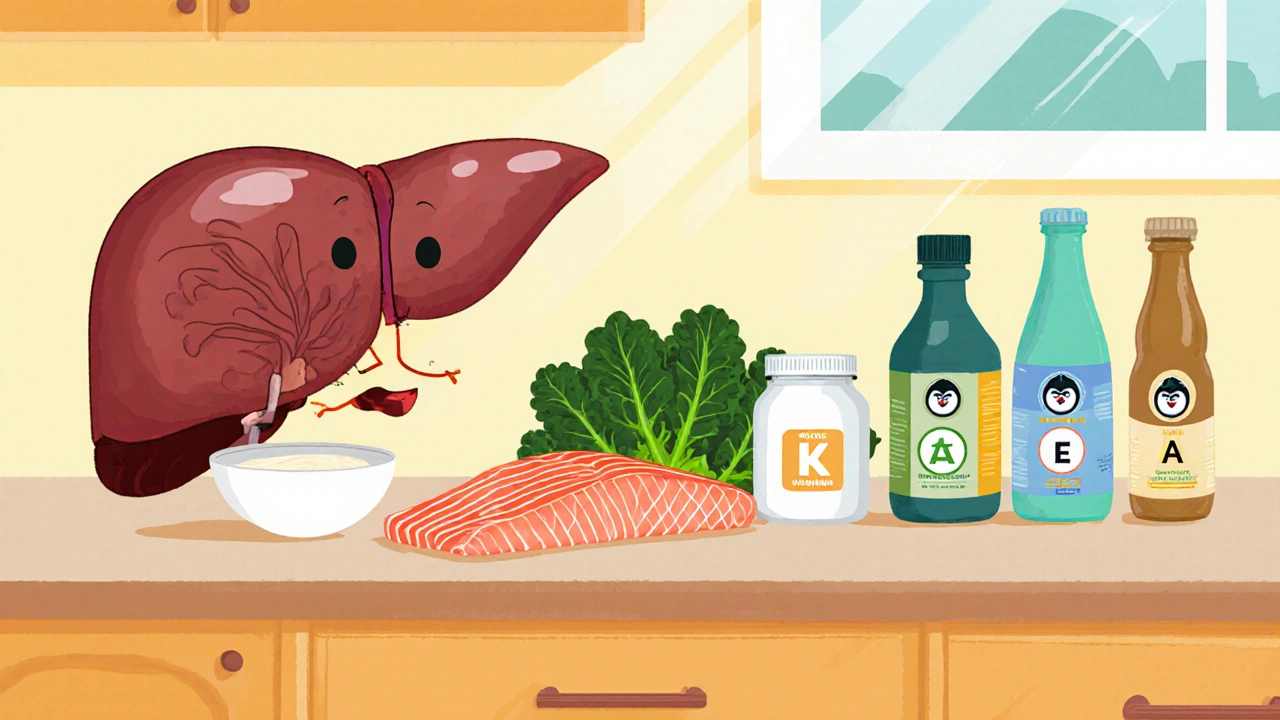
Step‑by‑Step Nutrition Management Plan
- Baseline Assessment
- Order a comprehensive panel: serum 25‑OH‑Vitamin D, prothrombin time/INR, retinol, α‑tocopherol, vitamin B12, zinc, and complete blood count.
- Document dietary habits using a 3‑day food diary, focusing on fat intake and fortified foods.
- Identify Deficiencies
- Compare labs to reference ranges adjusted for liver disease when available.
- Flag any abnormal values-especially Vitamin D < 20 ng/mL, INR > 1.5, or B12 < 200 pg/mL.
- Tailor Supplementation
- Choose water‑soluble or micelle‑enhanced formulations for fat‑soluble vitamins.
- Start low and titrate upward, monitoring for side effects (e.g., hypervitaminosis A).
- Monitor Progress
- Re‑check labs after 8‑12 weeks of supplementation.
- Adjust doses based on trends, not isolated numbers.
- Integrate Diet
- Encourage foods naturally rich in the target vitamins: fatty fish (Vitamin D, E), leafy greens (Vitamin K), liver pâté (Vitamin A, B12), nuts & seeds (Vitamin E, zinc).
- If fat intake is limited, use medium‑chain triglyceride (MCT) oils to boost micelle formation without overloading the liver.
- Educate the Patient
- Explain why supplements are needed even if they feel better on Ursodiol.
- Provide a simple checklist: “Take my Vitamin D with breakfast, Vitamin K with lunch, etc.”
Potential Pitfalls and How to Avoid Them
- **Over‑supplementation** - Fat‑soluble vitamins accumulate; stick to recommended upper limits and watch serum levels.
- **Drug‑Nutrient Interactions** - High‑dose calcium can bind bile acids and reduce Ursodiol absorption; separate dosing by at least two hours.
- **Non‑Adherence** - Simplify regimens; use combination pills when possible (e.g., Vitamin D + Calcium).
- **Renal Impairment** - Zinc and high‑dose vitamin A can stress kidneys; adjust doses if eGFR < 30 mL/min.

Real‑World Example
Maria, a 52‑year‑old with primary biliary cholangitis, started Ursodiol 13.5 mg twice daily. Six months later, she complained of bone aches despite stable liver enzymes. Labs showed 25‑OH‑Vitamin D = 12 ng/mL and INR = 1.6. Her clinician added 1500 IU Vitamin D daily, 100 µg Vitamin K, and a calcium‑MCT supplement. After three months, her Vitamin D rose to 35 ng/mL, bone pain resolved, and INR normalized. The case illustrates how targeted supplementation bridges the nutritional gap that Ursodiol alone cannot fill.
Quick Reference Checklist for Clinicians
- Order baseline vitamin panel at diagnosis of cholestasis.
- Start Vitamin D 800-2000 IU daily; adjust to >30 ng/mL.
- Prescribe Vitamin K 100-200 µg if INR >1.5 or if on warfarin.
- Consider Vitamin A 5000 IU daily for night‑vision issues, but stay < 10,000 IU.
- Supplement Vitamin E 400 IU daily for oxidative stress markers.
- Include B12 500 µg daily if anemia or neuropathy present.
- Check zinc 30 mg daily if hair loss or taste changes; monitor copper status.
- Re‑evaluate labs every 3 months for the first year, then bi‑annually.
Frequently Asked Questions
Does Ursodiol cure vitamin deficiencies?
No. Ursodiol improves bile flow but does not fully restore the micellar environment needed for optimal fat‑soluble vitamin absorption. Supplementation remains essential.
How often should I test my vitamin levels?
Check baseline at diagnosis, then repeat after 8‑12 weeks of supplementation. If stable, monitor every 6‑12 months.
Can high‑dose Vitamin D interfere with Ursodiol?
There is no direct interaction, but both should be taken with food to enhance absorption. Space them apart from calcium supplements to avoid binding.
Is it safe to use over‑the‑counter multivitamins?
Standard multivitamins often contain inadequate amounts of fat‑soluble vitamins for liver patients. Choose medical‑grade, micelle‑enhanced formulations or prescribe individual doses.
What dietary changes help alongside Ursodiol?
Focus on moderate healthy fats (olive oil, avocados), incorporate MCT oil if fat tolerance is low, and eat plenty of leafy greens, fatty fish, and fortified dairy. Limit simple sugars and alcohol.
By pairing Ursodiol with a proactive nutrition strategy, patients can stave off bone loss, bleeding risks, and the fatigue that often accompanies chronic liver disease. The roadmap above equips both clinicians and patients with concrete steps, so the medication’s benefits aren’t undercut by preventable vitamin shortfalls.
eko lennon
October 25, 2025
When I first stumbled upon the idea of pairing Ursodiol with a rigorous vitamin regimen, I felt as if I were stepping onto a grand stage where every nutrient was a character demanding its entrance.
The drama of liver disease is not just in the labs, it is in the silent battles that rage within the gut, the bile ducts, and the very marrow of our bones.
Picture a patient, eyes weary, trying to keep pace with a medication that promises relief, only to discover that the very fortitude they need is being siphoned away by an unseen deficiency.
The irony is palpable: a drug that eases itching while the body quietly loses Vitamin D, K, A, and E, the very guardians of bone health and coagulation.
Every missed microgram feels like a line cut from a script, leading to fractures that echo louder than any hepatic complaint.
And then there’s the haunting specter of bruises, bruises that form without a single bump, whispering that the clotting cascade has been sabotaged.
Imagine the patient’s frustration, a crescendo of fatigue that builds despite the best intentions of their clinician.
Each lab draw becomes a moment of suspense, waiting to see if Vitamin B12 will rise or if zinc will finally show up in the results.
The treatment plan evolves into a choreography where supplements are the understudies, ready to leap onto the stage when the main act falters.
Yet, over‑supplementation looms like an overzealous director, threatening toxicity if the dosage is not carefully moderated.
Clinicians must tread the fine line between generosity and recklessness, balancing the desire to correct deficiencies with the danger of hypervitaminosis.
What truly captivates me is how the humble medium‑chain triglyceride oil can step in, offering a biochemical bridge that the faltering liver cannot provide.
And let us not forget the psychological toll, the sense of defeat when a patient thinks they are ‘fixed’ by Ursodiol, only to be reminded that nutrition still needs vigilant attention.
In the end, the narrative is one of partnership: the medication, the supplement, the diet, and the patient must all perform in harmony.
Only then can the story resolve with restored strength, fewer fractures, and a brighter outlook for those navigating the stormy seas of cholestasis.
Melody Barton
October 25, 2025
Great info, keep it up. Stay consistent with your supplements and you’ll feel stronger. Simple steps like taking Vitamin D with breakfast help a lot. Remember to check labs regularly and adjust doses. You’ve got this.
Diane Holding
October 25, 2025
Thanks for the clear guidance. Short and sweet, it hits the main points.
Cheyanne Moxley
October 26, 2025
It’s shocking how many doctors just hand out Ursodiol and walk away, leaving patients to fend for themselves against silent vitamin steals.
We can’t excuse this negligence; the body deserves full support, not a half‑finished prescription.
Every time a deficiency goes unchecked is a betrayal, a reminder that cheap fixes aren’t enough for a sick liver.
Kevin Stratton
October 26, 2025
Isn't it fascinating how the mind seeks balance?
Just as the liver strives for equilibrium, we must philosophically accept that supplementation is the yin to Ursodiol's yang. 😊
Manish Verma
October 26, 2025
Honestly, it's a disgrace that our health system lets patients rely on a single drug without proper nutritional backing.
In my country we prioritize holistic care, ensuring vitamins aren't an afterthought.
People deserve a treatment plan that respects both liver function and overall wellbeing, not a half‑baked approach.
Lionel du Plessis
October 26, 2025
yeah supplements matter but doctors should add them.
Andrae Powel
October 26, 2025
From a practical standpoint, pairing Ursodiol with targeted vitamin therapy is a win‑win.
Start with baseline labs, supplement Vitamin D, K, A, and E as indicated, and re‑check every few months.
Keep dosing intervals clear – separate calcium from Ursodiol by a couple of hours – and watch for signs of over‑supplementation.
With this structured plan, patients can enjoy the benefits of improved bile flow while safeguarding bone health and clotting factors.
Stay proactive, stay monitored, and the journey becomes smoother for everyone.