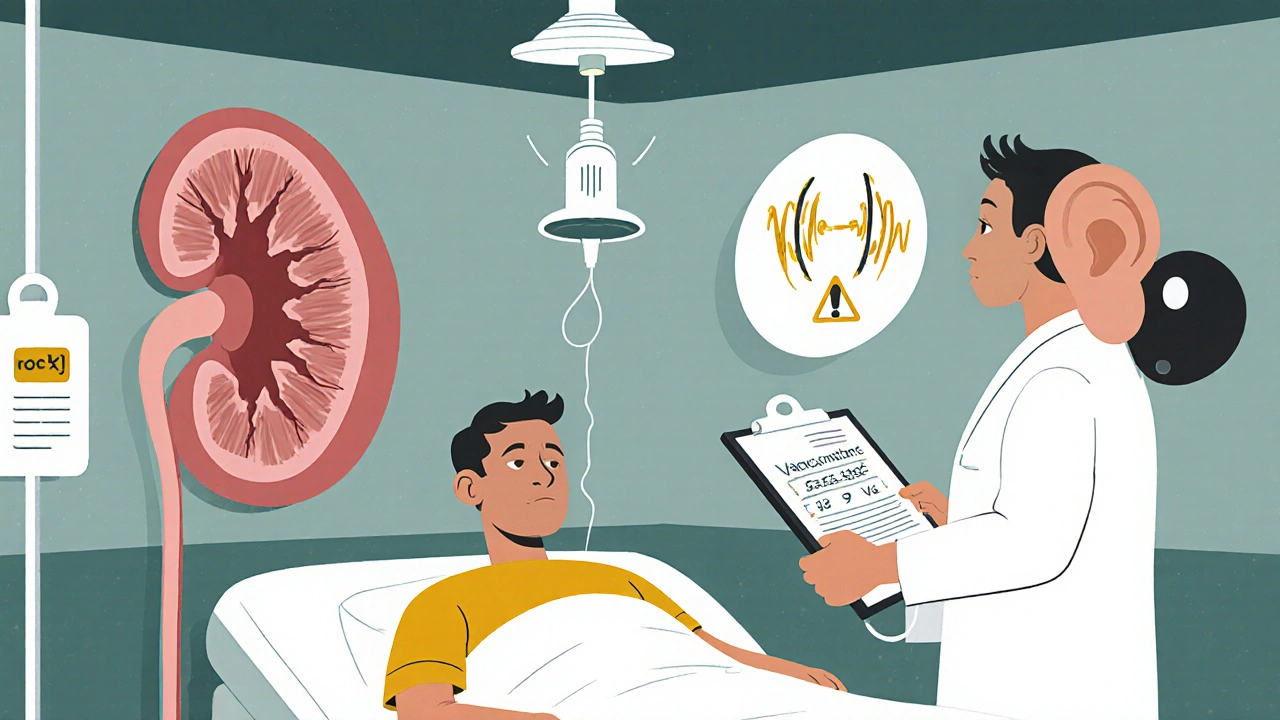
Vancomycin Ototoxicity: What You Need to Know About Hearing Risks
When you take vancomycin, a powerful antibiotic used for serious bacterial infections like MRSA. Also known as Vancocin, it’s often a last-resort drug when others fail. But for some people, it can damage the inner ear — a side effect called vancomycin ototoxicity. This isn’t common, but when it happens, it can lead to permanent hearing loss or ringing in the ears (tinnitus), especially if you’re on high doses for more than a week or have kidney problems.
Vancomycin ototoxicity doesn’t affect everyone. It’s more likely in older adults, people with kidney disease, those taking other ototoxic drugs like furosemide or gentamicin, or if blood levels of vancomycin aren’t monitored. The drug builds up in the inner ear fluids and can destroy the tiny hair cells that send sound signals to your brain. Once those cells are gone, they don’t come back. That’s why doctors check your kidney function before and during treatment — if your kidneys can’t clear the drug fast enough, levels rise and the risk goes up.
Some people notice hearing changes early — muffled sounds, trouble understanding speech in noisy rooms, or a constant buzz in one or both ears. Others don’t notice anything until it’s too late. That’s why regular hearing checks during long-term vancomycin therapy matter, even if you feel fine. It’s not just about the drug — it’s about how your body handles it. People with pre-existing hearing loss or those on multiple medications are especially vulnerable.
What you’ll find here are real-world guides from patients and clinicians who’ve dealt with this. You’ll read about how vancomycin interacts with other drugs, how to spot early signs of damage, what blood tests doctors use to stay safe, and what to do if you notice hearing changes. Some posts talk about managing side effects while still treating life-threatening infections. Others explain why certain patients — like those in intensive care or with cystic fibrosis — need extra monitoring. You won’t find fluff here. Just clear, practical info on how to reduce risk, recognize trouble early, and talk to your care team about alternatives if needed.