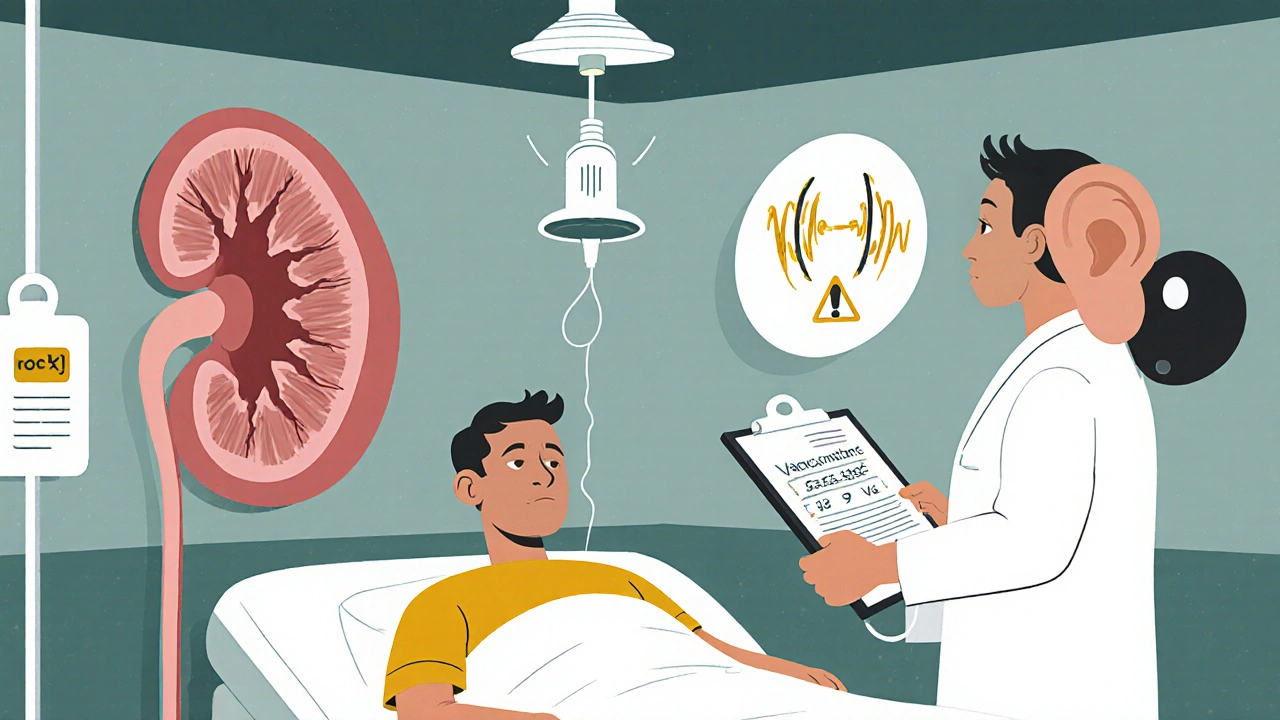
Vancomycin Nephrotoxicity: What You Need to Know About Kidney Risks
When you take vancomycin, a powerful antibiotic used to treat serious bacterial infections like MRSA. Also known as Vancocin, it saves lives—but it can also hurt your kidneys if not used carefully. This side effect, called vancomycin nephrotoxicity, kidney damage caused by the drug, isn’t rare. Studies show up to 25% of patients on long-term vancomycin treatment show signs of reduced kidney function. It’s not the drug’s fault alone—it’s often a mix of dose, duration, and your body’s condition.
Renal toxicity, the technical term for kidney injury from medications from vancomycin usually shows up as rising creatinine levels in blood tests. You might not feel sick at first, but your kidneys are working harder—or failing to filter waste. Risk goes up if you’re older, already have kidney issues, take other nephrotoxic drugs like NSAIDs or aminoglycosides, or get high doses over several days. Dehydration makes it worse. Even healthy people can be affected if they’re on vancomycin for more than a week.
Doctors watch this closely. They check your kidney function before and during treatment, adjust doses based on weight and kidney health, and sometimes switch to safer alternatives if signs appear. The goal isn’t to avoid vancomycin—it’s to use it smartly. If you’re on this drug, know your numbers. Ask your provider: "Is my creatinine trending up?" and "Could my dose be lowered?" Early detection means you can keep taking the medicine without lasting damage.
What you’ll find below are real patient-focused guides that break down how vancomycin affects the kidneys, what labs to track, how other drugs make it worse, and what steps you can take to protect yourself. You’ll also see how it compares to other antibiotics with similar risks, and how to talk to your doctor about alternatives if needed. No fluff. Just clear, practical info to help you stay safe while getting the treatment you need.