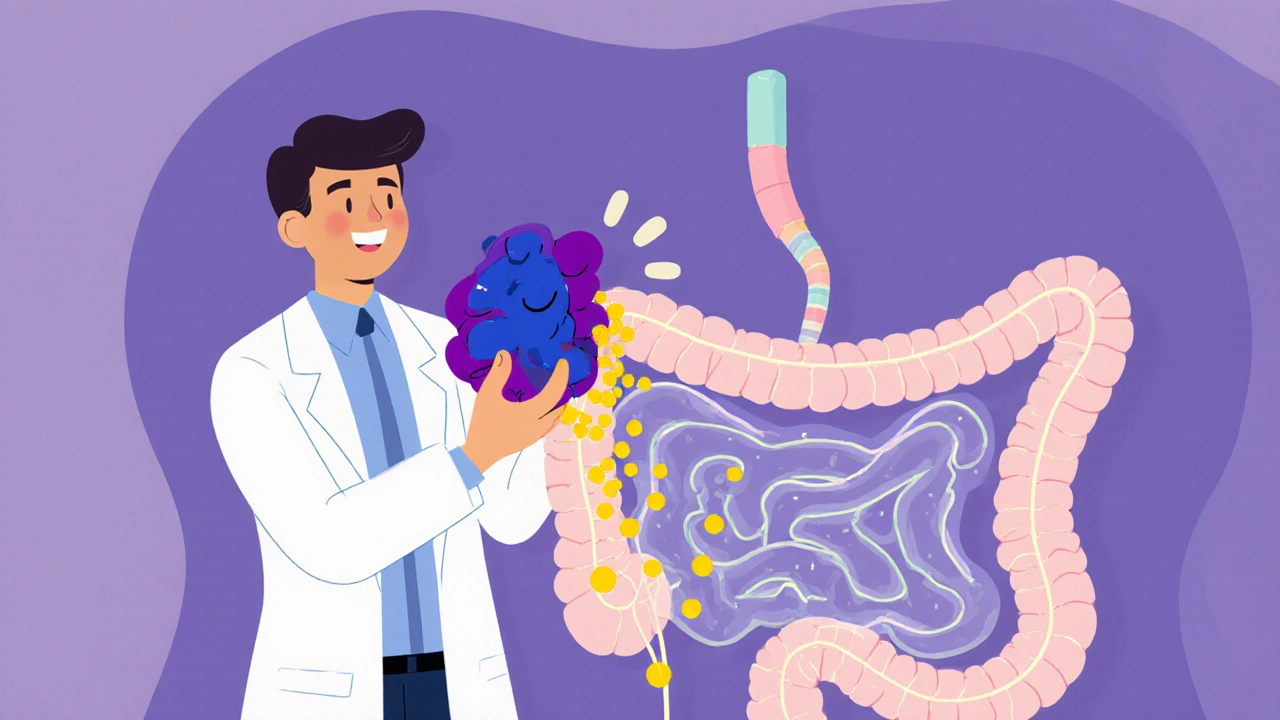
Cholestyramine for IBS Relief: How It Works & What to Expect
Explore how cholestyramine works for IBS, who can benefit, dosing tips, side‑effects, and alternative treatments in this practical guide.
When working with bile acid sequestrant, a class of prescription drugs that bind bile acids in the intestines to lower blood cholesterol. Also known as cholesterol‑binding resin, it helps reduce LDL cholesterol, the “bad” cholesterol that builds up in artery walls and can be combined with other lipid‑lowering agents like statins, a drug class that reduces cholesterol production in the liver. These drugs are a key tool for managing hyperlipidemia, elevated blood lipids that increase cardiovascular risk and are especially useful when diet and lifestyle changes need extra support.
The core idea is simple: bind the bile acids released after a meal, prevent their re‑absorption, and force the liver to use more cholesterol to make fresh bile. This process pulls cholesterol out of the bloodstream and drops LDL cholesterol levels. Because they don’t interfere with cholesterol synthesis, they can be added to statin therapy without raising the risk of liver toxicity. Doctors often prescribe them for patients who can’t reach target LDL numbers on statins alone, for those who experience statin side effects, or for people with specific conditions like familial hypercholesterolemia. Common brands such as colestyramine, colesevelam, and cholestyramine are available as powders or tablets that you mix with water or take with food.
While the cholesterol‑lowering effect is valuable, the main trade‑off is gastrointestinal discomfort. Because the resin sits in the gut, it can cause bloating, constipation, or watery stools. Taking the medication with meals, staying hydrated, and gradually increasing the dose can blunt these issues. Another practical point: the resin can bind other oral drugs and vitamins, reducing their absorption. Timing other medications at least one hour before or four hours after the resin helps avoid unwanted interactions, especially with thyroid hormones, warfarin, and fat‑soluble vitamins.
From a patient‑centered view, choosing the right formulation matters. Powdered versions allow dose titration and may be easier for those who have trouble swallowing tablets. Tablet forms, on the other hand, offer convenience and less mess. Regardless of format, regular monitoring of lipid panels is essential to see how well the therapy is working and to adjust the dose if needed. Lifestyle habits—like a diet rich in fiber, regular exercise, and weight control—still play a big role and can enhance the drug’s effectiveness.
Below you’ll find a curated set of articles that dig deeper into the science, safety tips, and real‑world experiences with bile acid sequestrants. Whether you’re new to cholesterol management or looking for ways to fine‑tune an existing regimen, these posts give practical insights you can apply right away.
Explore how cholestyramine works for IBS, who can benefit, dosing tips, side‑effects, and alternative treatments in this practical guide.
Explore whether cholestyramine can ease menopause symptoms, its benefits, risks, evidence, and practical tips for safe use.