Metformin Cost Calculator
Find Your Cost Savings
Compare the monthly cost of different metformin brands for your prescription. Many patients save significantly by switching to generic or other extended-release options.
Important Considerations
Remember: Cost isn't the only factor when choosing a metformin brand. Some people tolerate certain brands better than others due to different inactive ingredients.
If you're experiencing side effects with Glycomet SR, speak to your doctor or pharmacist about switching to another brand that might be gentler on your stomach.
Generic metformin SR is just as effective as branded versions and can offer significant savings while providing the same benefits.
If you’re taking Glycomet SR for type 2 diabetes, you’ve probably wondered if there’s a better option. Maybe your stomach feels upset after taking it. Or maybe your prescription cost went up. Or perhaps your doctor mentioned other metformin brands - and you’re not sure if switching makes sense. You’re not alone. Thousands of people in the UK take metformin every day, and many are looking for alternatives that fit their body, budget, or lifestyle better.
What is Glycomet SR?
Glycomet SR is a brand name for metformin in extended-release form. It’s made by Cipla and widely prescribed in the UK and India. The ‘SR’ stands for sustained release, meaning it releases the medicine slowly over 8-12 hours. This helps reduce side effects like nausea and diarrhoea compared to regular metformin tablets.
Metformin is the first-line drug for type 2 diabetes. It works by lowering glucose production in the liver and helping your body use insulin better. Unlike some other diabetes pills, it doesn’t cause weight gain - and may even help with modest weight loss. It’s also cheap, safe for long-term use, and has been around since the 1950s.
Why People Look for Alternatives
Even though metformin is effective for most people, it’s not perfect. About 20-30% of users experience gastrointestinal side effects - bloating, gas, loose stools. These usually fade after a few weeks, but for some, they stick around. Others find the cost of branded versions like Glycomet SR adds up over time. Some doctors switch patients to generic metformin or other drugs when metformin alone isn’t enough to control blood sugar.
Here’s what most people are really asking:
- Is generic metformin just as good as Glycomet SR?
- Are there newer drugs with fewer side effects?
- What if metformin isn’t working anymore?
- Can I avoid injections?
Generic Metformin SR vs Glycomet SR
Many people assume branded drugs are stronger or more reliable. That’s not always true. In the UK, generic metformin SR is just as effective as Glycomet SR - same active ingredient, same dosage, same release mechanism.
The main difference? Price. Glycomet SR might cost £15-£20 for a 30-day supply. Generic metformin SR can be as low as £2-£5 through the NHS or private pharmacies. Both are manufactured to the same strict standards set by the MHRA (Medicines and Healthcare products Regulatory Agency).
Some patients report feeling different on one brand versus another. This isn’t because one is stronger - it’s because inactive ingredients (fillers, coatings) vary between manufacturers. These can affect how quickly the tablet dissolves. If you switch from Glycomet SR to a generic and notice more stomach upset, talk to your pharmacist. They can help you find a generic with a similar coating or suggest a different extended-release brand like Glucophage SR.
Other Metformin Brands You Might See
Here are the most common metformin SR brands available in the UK:
| Brand Name | Manufacturer | Available Doses (mg) | Typical Monthly Cost (NHS) | Common Side Effects |
|---|---|---|---|---|
| Glycomet SR | Cipla | 500, 750, 1000 | £15-£20 | Nausea, diarrhoea, bloating |
| Glucophage SR | Merck | 500, 750, 1000 | £5-£10 | Mild GI upset |
| Metformin SR (Generic) | Multiple | 500, 750, 1000 | £2-£5 | Varies by manufacturer |
| Fortamet | Endo Pharmaceuticals | 500, 750, 1000 | Not available in UK | Low GI impact |
Fortamet is an American extended-release metformin with a different coating technology. It’s not sold in the UK, but it’s often mentioned in online forums because users report fewer stomach issues. If you’re struggling with side effects, ask your doctor about switching to Glucophage SR - it’s widely available and often better tolerated than Glycomet SR.
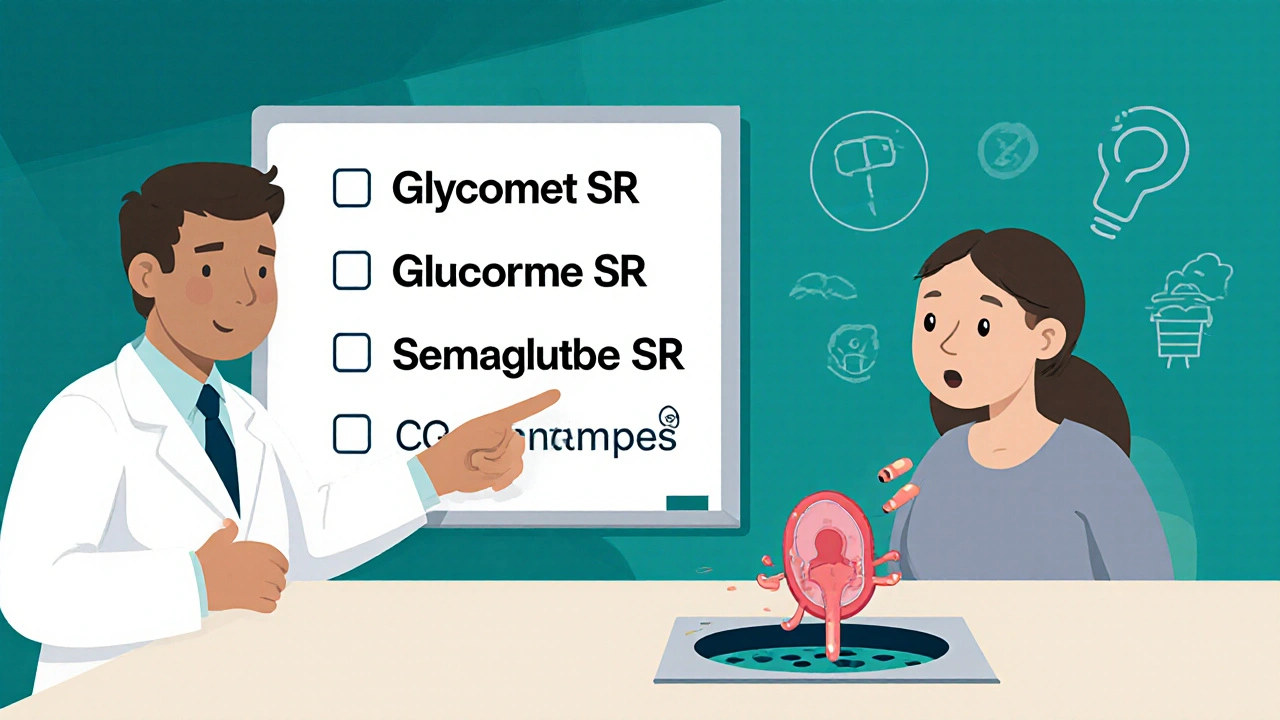
Non-Metformin Alternatives for Type 2 Diabetes
What if metformin isn’t enough? Or if side effects are too much to handle? There are several non-metformin options that work well on their own or with metformin.
SGLT2 Inhibitors (e.g., Empagliflozin, Dapagliflozin)
These drugs make your kidneys flush out extra sugar through urine. They’re not just blood sugar pills - they also lower your risk of heart failure and kidney disease. Many people lose 2-5 kg on these drugs. Side effects? Increased urination, risk of yeast infections, and rare but serious risk of diabetic ketoacidosis.
Empagliflozin (Jardiance) is often prescribed alongside metformin. It’s covered by the NHS for people with heart disease or high risk of it.
GLP-1 Receptor Agonists (e.g., Semaglutide, Liraglutide)
These are injectables - but they’re becoming more popular because they’re powerful. Semaglutide (Ozempic, Wegovy) can lower HbA1c by 1.5-2% and cause up to 10% weight loss. It’s now available on the NHS for people with type 2 diabetes and a BMI over 30, especially if metformin failed.
Some patients start on metformin, then add semaglutide when their sugar stays high. Others skip metformin entirely and go straight to semaglutide if weight loss is their main goal.
DPP-4 Inhibitors (e.g., Sitagliptin, Saxagliptin)
These are oral pills that boost your body’s own insulin production. They’re weight-neutral and gentle on the stomach. But they’re not as strong as metformin or SGLT2 inhibitors. HbA1c drops by about 0.5-0.8%. They’re often used when other drugs aren’t suitable - like for older patients or those with kidney issues.
Thiazolidinediones (e.g., Pioglitazone)
These make your body more sensitive to insulin. They’re cheap and effective - but they can cause weight gain, fluid retention, and increase fracture risk in women. Not commonly used now unless other options have failed.
When to Stick With Glycomet SR
There’s no shame in sticking with Glycomet SR if it’s working. If your blood sugar is stable, you’re not having side effects, and you can afford it - there’s no need to switch. Many people do better on one brand simply because their body got used to it.
Also, if you’ve tried generics and had bad reactions, your body might just respond better to Glycomet SR’s specific formulation. Don’t assume generic = better. It’s about what works for you.
What Your Doctor Will Consider Before Switching
Doctors don’t switch medications on a whim. They look at:
- Your HbA1c levels (target is usually below 7%)
- Your kidney function (metformin is cleared by kidneys - if they’re weak, you can’t take it)
- Your weight and heart health
- Your budget and NHS eligibility
- Your tolerance for side effects
If your HbA1c is still above 7% on Glycomet SR 1000mg daily, your doctor might add a second drug instead of switching. That’s more common than replacing metformin entirely.
Real-Life Scenarios
Scenario 1: You’re 58, take Glycomet SR 1000mg, and still have HbA1c of 8.2%. You’re tired of bloating. Your doctor adds empagliflozin. Within 3 months, your HbA1c drops to 6.8%, and you’ve lost 4 kg. No more stomach issues.
Scenario 2: You’re 45, overweight, and just diagnosed. Your GP starts you on generic metformin SR. After 2 weeks, you get severe diarrhoea. You switch to Glucophage SR - symptoms vanish. Your HbA1c drops to 6.1% in 4 months.
Scenario 3: You’re 67, have heart disease, and take Glycomet SR. Your doctor switches you to semaglutide because it reduces heart attack risk. You’re on a weekly injection now, but your sugar is better than ever.
What to Do Next
If you’re unhappy with Glycomet SR, don’t stop it on your own. Talk to your GP or diabetes nurse. Bring your blood sugar log. Ask:
- Is my current dose enough?
- Could a different brand help my side effects?
- Would adding another oral drug be better than switching?
- Am I eligible for newer drugs like semaglutide on the NHS?
Most people find a solution within one or two adjustments. Metformin is still the gold standard - but it’s not the only tool in the box.
Common Myths About Metformin Alternatives
- Myth: Newer drugs are always better. Truth: They’re often more expensive and not always more effective for everyone. Metformin still works best for most.
- Myth: Generic metformin is inferior. Truth: It’s the same drug. Differences in side effects are due to fillers, not potency.
- Myth: Injections are only for type 1 diabetes. Truth: GLP-1 drugs like semaglutide are now first-line for many type 2 patients, especially if weight loss is needed.
- Myth: If I switch, I’ll lose control. Truth: Switching brands or adding a drug often improves control - especially if side effects were keeping you from taking your medicine regularly.
Diabetes management isn’t about finding the perfect pill. It’s about finding the right combination that lets you live well - without constant stomach pain, frequent hospital visits, or fear of complications.
Is Glycomet SR better than generic metformin?
No, Glycomet SR isn’t more effective than generic metformin SR. Both contain the same active ingredient, metformin, in the same extended-release form. The difference lies in inactive ingredients, which can affect how easily the tablet dissolves. Some people tolerate one brand better than another due to these fillers, but clinically, they’re equivalent. Generic metformin is often cheaper and just as safe.
Can I switch from Glycomet SR to Glucophage SR on my own?
No. Always consult your doctor or pharmacist before switching. Even though both are metformin SR, different manufacturers use different coatings and fillers. Switching without guidance could cause stomach upset or changes in how the drug is absorbed. Your healthcare provider can help you transition safely and monitor your blood sugar during the change.
Are there any metformin alternatives that don’t cause stomach issues?
Yes. SGLT2 inhibitors like empagliflozin and DPP-4 inhibitors like sitagliptin rarely cause gastrointestinal side effects. GLP-1 agonists like semaglutide can cause nausea at first, but it usually fades. If stomach problems persist with metformin, your doctor may recommend switching to one of these instead - or adding one to your current dose to reduce the metformin amount.
Why do some people need injections instead of pills?
Pills like metformin work well for many, but if blood sugar stays high despite maximum doses, stronger options are needed. GLP-1 agonists like semaglutide are injectable drugs that mimic natural hormones to lower blood sugar and promote weight loss. They’re especially helpful for people with obesity, heart disease, or those who haven’t responded to oral medications. Injections aren’t a sign of failure - they’re a more effective tool when needed.
Can I take metformin if I have kidney problems?
Metformin is cleared by the kidneys, so it’s not safe if your kidney function is severely reduced (eGFR below 30). If your eGFR is between 30-45, your doctor may lower your dose. Regular kidney tests are required if you’re on metformin long-term. If your kidneys aren’t working well, alternatives like DPP-4 inhibitors or SGLT2 inhibitors are safer options.
Is metformin still the best first choice for type 2 diabetes?
Yes, according to UK and international guidelines (NICE, ADA, EASD). Metformin is the most studied, safest, and most cost-effective first-line drug for type 2 diabetes. It doesn’t cause weight gain or low blood sugar. Newer drugs are often added on top - not used instead - unless metformin isn’t tolerated or contraindicated.
Final Thoughts
There’s no single best metformin brand or alternative. Glycomet SR works for many. Generic metformin saves money. Glucophage SR is gentler on the stomach. SGLT2 inhibitors protect your heart. Semaglutide helps you lose weight. The right choice depends on your health, your body, and your goals.
Don’t let fear of change keep you stuck. Talk to your care team. Track your symptoms. Ask questions. You’re not just managing blood sugar - you’re building a sustainable way to stay healthy for years to come.
Megan Raines
October 31, 2025
So let me get this straight - we’re paying £15 for Glycomet SR when the generic does the exact same thing for £2? And people wonder why healthcare’s a joke. I mean, I get branding, but this is just capitalism flexing on diabetics. 🤡
Mamadou Seck
November 2, 2025
bro why are we even talking about brands when semaglutide exists like imagine losing 10 lbs and your sugar dropping without feeling like your guts are staging a rebellion
Anthony Griek
November 3, 2025
Ive been on metformin for 8 years and switched from Glycomet to generic last year. No difference in my numbers but saved me like 400 a year. My pharmacist said its all about the fillers. If you get stomach issues try Glucophage SR. It’s smoother. No drama.
Norman Rexford
November 4, 2025
USA has the best drugs but we gotta pay for it lol. Over here in the states even generics are expensive. I tried the UK system on paper and it sounds like heaven. But then again we got Ozempic on the shelf and they dont even have it yet. So who’s really winning? 🤔
Shana Labed
November 5, 2025
YALL. I switched to empagliflozin last month and I’m literally crying happy tears. No bloating. No midnight bathroom runs. And I lost 6 lbs without trying. If you’re still stuck on metformin and suffering - PLEASE talk to your doc. There’s hope. You don’t have to suffer. 💪🩺
California Daughter
November 6, 2025
Wait… so you’re telling me… that… the ‘sustained release’… is just… a marketing gimmick… because… generics… are… literally… the same…? But… but… the packaging… looks… different…? 😵💫
Vishwajeet Gade
November 7, 2025
guyz glycomet sr is made in india and its the best. usa drugs are overpriced garbage. i take it and my sugar is perfect. why change what works? indian pharma = win. no cap.
Casey Crowell
November 8, 2025
Just want to say - if you’re on metformin and it’s wrecking your gut, you’re not broken. You just haven’t found your fit yet. I went from Glycomet SR → Glucophage → SGLT2 inhibitor. Took 3 tries. Now I’m stable, lost weight, and actually enjoy food again. 🤝❤️ You got this.