Vancomycin Monitoring: Why It Matters and What to Watch For
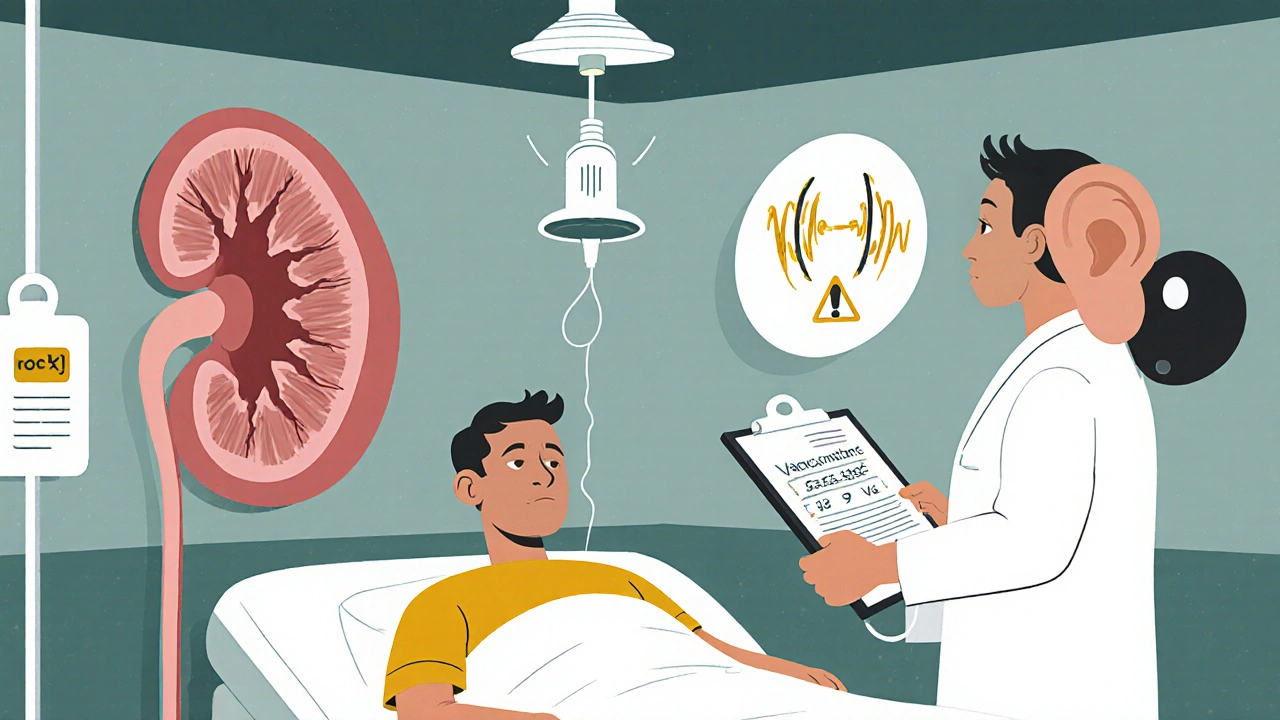
When you're on vancomycin, a powerful antibiotic used for serious bacterial infections like MRSA and sepsis. Also known as Vancocin, it's one of the last lines of defense against drug-resistant infections. But this drug isn’t simple. Too little and it won’t kill the bacteria. Too much and it can damage your kidneys or hearing. That’s why vancomycin monitoring, the process of checking blood levels to ensure the right dose isn’t optional—it’s essential.
Doctors don’t just guess your dose. They rely on trough levels, the lowest concentration of the drug in your blood right before your next dose. If your trough is below 10 mcg/mL, the infection might not respond. If it’s above 15–20 mcg/mL, your risk of kidney injury jumps. This isn’t theoretical—studies show patients with poorly monitored vancomycin levels are twice as likely to suffer kidney damage. And it’s not just about kidneys. drug toxicity, harm caused by excessive medication can also mean ringing in your ears or even permanent hearing loss. That’s why monitoring happens regularly, often after the third or fourth dose, and then again if your weight changes, your kidney function drops, or you’re on other drugs that interact with vancomycin.
It’s not just the dose that matters. Your body’s ability to clear the drug depends on your kidneys. If you’re older, dehydrated, or already have kidney trouble, your vancomycin stays in your system longer. That’s why doctors adjust doses based on your creatinine levels and sometimes even your weight. They also watch for signs like reduced urine output or sudden hearing changes. Even small shifts in how you feel can mean something big is happening inside your body.
What you’ll find in the posts below isn’t just theory. It’s real-world guidance on how vancomycin is tracked, what labs are checked, how often, and what happens when things go off track. You’ll see how it compares to other antibiotics that need close watching, what patients actually experience, and how to recognize warning signs before they become emergencies. This isn’t about memorizing numbers—it’s about understanding why your care team keeps asking for blood tests, and what those tests are really protecting you from.