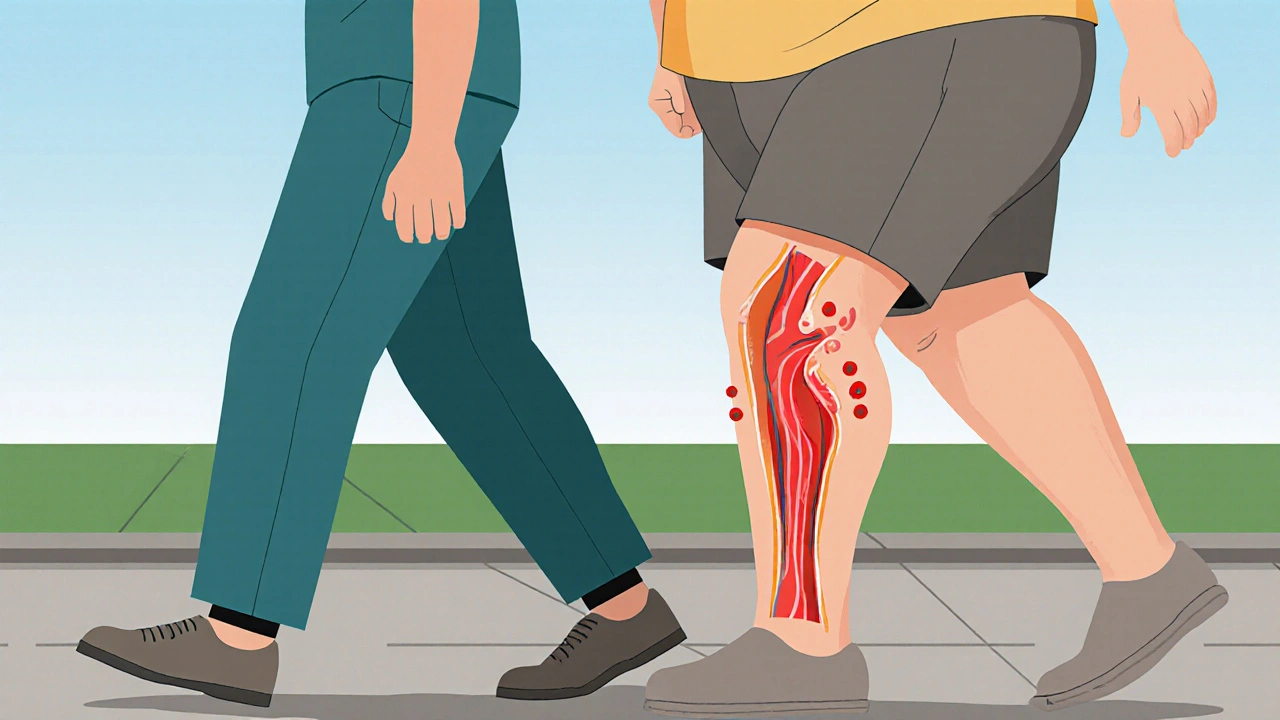
Obesity’s Effect on Intermittent Claudication and How to Lose Weight
Explore how obesity worsens intermittent claudication, how weight loss improves symptoms, and practical steps to walk pain‑free.
When dealing with Peripheral artery disease, a circulatory condition where narrowed arteries limit blood flow to the legs and feet. Also known as PAD, it often stems from atherosclerosis, the buildup of plaque inside arterial walls. This plaque reduces vessel diameter, creates turbulence, and raises the risk of blood clots. Because arteries in the lower limbs have to work against gravity, even modest plaque can cause noticeable problems. The disease doesn’t stay hidden forever – most people notice pain, fatigue, or skin changes when they walk or stand for a while.
The hallmark sign of PAD is claudication, a cramping pain in the calf, thigh, or buttock that appears during activity and eases with rest. Claudication occurs when muscles demand more oxygen than the narrowed arteries can supply, leading to a temporary anaerobic state. People often describe it as “walking on hot coals” or a tight band around the leg. Aside from pain, you might see shiny skin, slower nail growth, or even ulcers that won’t heal – all consequences of poor perfusion. If left unchecked, the disease can progress to critical limb ischemia, where even resting pain or tissue loss can happen.
Diagnosing PAD starts with a simple ankle‑brachial index (ABI) test, which compares blood pressure in the ankle with that in the arm. An ABI below 0.90 signals abnormal flow. Imaging—like duplex ultrasound, CT angiography, or MR angiography—helps map the exact location and severity of blockages. Knowing where the plaque sits guides the next steps, whether it’s medical therapy, supervised exercise, or a procedural fix.
Many patients wonder how to slow the disease down or even reverse the damage. Lifestyle changes are the foundation: quitting smoking, controlling diabetes, managing blood pressure, and eating a heart‑healthy diet packed with fruits, vegetables, whole grains, and lean protein. Physical activity—especially structured walking programs—improves collateral circulation, letting tiny vessels form alternative routes around blockages. For many, the next line of defense is medication.
Statins are cholesterol‑lowering drugs that do more than just reduce LDL. They stabilize plaque, reduce inflammation, and modestly encourage the arteries to remodel, which can improve flow over time. Evidence shows that patients on statins experience fewer cardiovascular events and milder PAD symptoms. Antiplatelet agents such as aspirin or clopidogrel also play a role by preventing clot formation on the rough plaque surface.
If symptoms persist despite medical therapy, procedural options become viable. Angioplasty—often combined with a stent—physically widens the narrowed segment by inflating a tiny balloon and leaving a scaffold to keep the artery open. In more extensive disease, bypass surgery using a vein graft may be recommended. Both approaches aim to restore adequate blood flow, relieve claudication, and protect the limb from ulceration.
Choosing the right strategy depends on the extent of atherosclerosis, the patient’s overall health, and personal preferences. A typical care pathway starts with risk‑factor reduction, adds statins and antiplatelet therapy, moves to supervised exercise, and finally considers revascularization if quality of life is still impacted. Regular follow‑up, ABI monitoring, and symptom tracking let both doctor and patient see what works and adjust as needed.
Beyond the clinical side, it’s helpful to know how PAD ties into broader cardiovascular health. The same plaques that narrow leg arteries also affect the heart and brain, meaning a PAD diagnosis flags higher risk for heart attacks and strokes. Treating PAD, therefore, isn’t just about leg pain – it’s a window into systemic vascular disease that deserves a comprehensive approach.
Below you’ll find a curated collection of articles that dive deeper into specific drugs, lifestyle tips, and procedural options mentioned here. Whether you’re looking for a side‑by‑side medication comparison, practical advice on managing sleep while on diuretics, or insights into how certain heart drugs might affect migraine frequency, our guides give you the details you need to make informed decisions about peripheral artery disease and its many facets.
Explore how obesity worsens intermittent claudication, how weight loss improves symptoms, and practical steps to walk pain‑free.