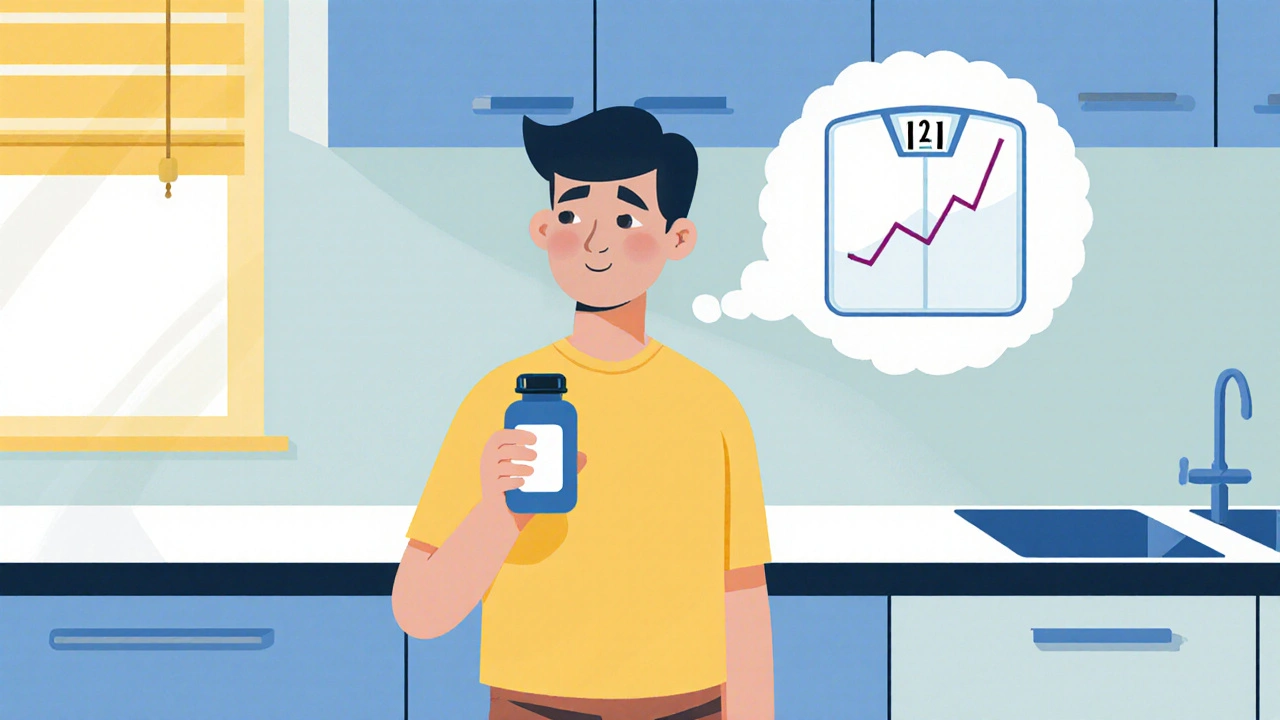
Mirtazapine Weight Gain Explained: What to Expect and How to Manage It
Learn why Mirtazapine often leads to weight gain, how much you can expect to gain, and practical steps to manage or use this effect wisely.
When working with Mirtazapine weight gain, the increase in body weight that some people experience while taking the antidepressant mirtazapine. Also known as Mirtazapine‑induced weight gain, it can affect treatment decisions and overall health.
The core player here is Mirtazapine, a tetracyclic antidepressant that blocks certain receptors to boost mood. By antagonizing histamine H1 receptors, it triggers a noticeable rise in appetite – a key driver of the weight gain we see. This appetite boost is not just a side note; it’s a direct link: Mirtazapine weight gain encompasses increased hunger, which often leads to higher calorie intake.
Weight gain, the accumulation of excess body mass, typically from fat or fluid while on mirtazapine isn’t random. The drug’s action on serotonin and norepinephrine pathways can also slow metabolism, making it easier for extra calories to turn into fat. In simple terms, the medication changes both sides of the energy equation: you feel hungrier and burn fewer calories.
Another piece of the puzzle is appetite, the desire to eat, driven by hormonal and neural signals. Mirtazapine’s antihistamine effect mimics the natural hunger signals that occur when you’re low on energy. This means meals feel more rewarding, and snacking becomes a default response rather than a conscious choice.
Putting these facts together creates a clear chain: Mirtazapine influences neurotransmitters → appetite rises → caloric intake goes up → weight gain follows. Managing any one link can help break the chain.
So, how can you keep the weight gain in check? First, record what you eat. Tracking meals shines a light on hidden calories that might otherwise slip by. Second, schedule regular physical activity – even a brisk 30‑minute walk can counteract the slower metabolic rate. Third, talk to your prescriber about dose timing; taking mirtazapine at night can reduce daytime hunger spikes.
If weight gain becomes a serious concern, consider a dose adjustment or switching to another antidepressant with a lower propensity for this side effect. Many clinicians weigh the benefits of mood improvement against the risk of added pounds, especially for patients with diabetes or cardiovascular issues.
Below you’ll find a curated set of articles that dive deeper into each of these aspects – from the science behind mirtazapine’s appetite effects to practical diet plans and medication alternatives. Whether you’re just starting treatment or looking for ways to stay on track, the resources ahead give you the tools to manage weight while still getting the mood support you need.
Learn why Mirtazapine often leads to weight gain, how much you can expect to gain, and practical steps to manage or use this effect wisely.