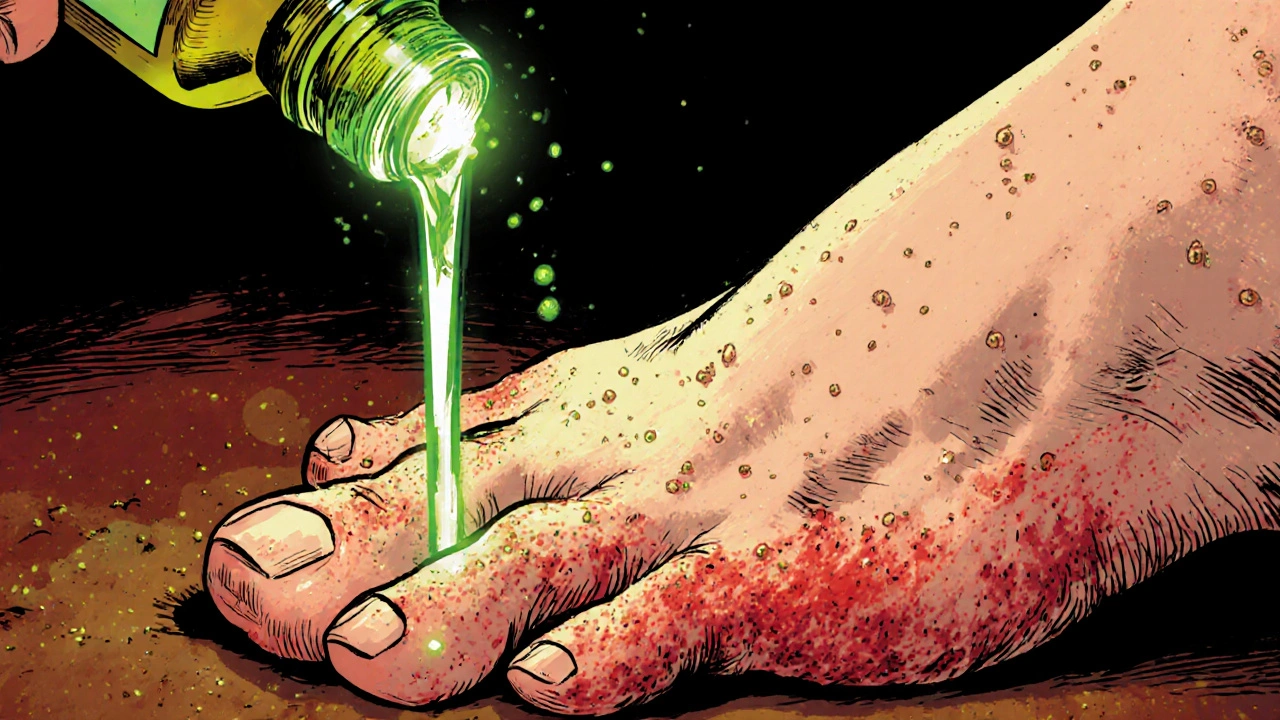
Top Natural Ingredients for Effective Athlete's Foot Treatment
Discover the most effective natural ingredients for athlete's foot, how they work, and practical ways to choose or DIY treatments for fast relief.
When dealing with Fungal Foot Infection, a common skin condition caused by dermatophyte fungi that love warm, moist places. Also known as athlete's foot, it can turn a simple walk into an uncomfortable experience if you don’t spot it early.
One of the most frequent forms of this problem is Tinea Pedis, the medical term for the itching, scaling and redness that appear between the toes or on the soles. It’s a subtype of fungal foot infection that thrives in sweaty shoes, public showers and locker rooms. The condition often starts as a tiny white patch, then spreads as the fungus feeds on dead skin cells. If you’re an athlete, a runner, or anyone who spends a lot of time in damp footwear, you’re in the high‑risk group.
First‑hand signs include itching, burning, or a stinging sensation that gets worse after a day of activity. You may notice cracked skin, especially between the fourth and fifth toes, or a moist, flaky area that looks like a mild rash. The fungus produces keratin‑digesting enzymes, which break down the outer skin layer and let the spores spread. That’s why you’ll often see a distinct “moccasin‑type” pattern on the sole of the foot – the fungus spreads in a ring‑shaped pattern, feeding on the skin’s keratin.
Diagnosis is usually visual, but a quick skin scraping examined under a microscope or a culture can confirm the culprit. Knowing the exact species helps choose the right medication, but most over‑the‑counter options work for the common Trichophyton rubrum and Trichophyton mentagrophytes strains.
Treatment hinges on Antifungal Medication, drugs that kill or stop the growth of the fungi causing the infection. Topical creams, sprays or powders containing terbinafine, clotrimazole or miconazole are the first line of defense. Apply them twice daily for two to four weeks, even if symptoms improve earlier, to ensure the fungus is fully eradicated. For severe or widespread cases, oral antifungals like fluconazole or itraconazole may be needed, but they require a prescription and monitoring for side effects.
While medication clears the infection, preventing a return is equally important. That’s where Foot Hygiene, regular cleaning, drying and caring for the feet to avoid fungal growth comes in. Keep your feet clean, dry them thoroughly after showering (especially between the toes), and change socks at least once a day. Choose breathable shoes made of natural materials, and rotate them to let them air out.
Additional tips include using antifungal powder in shoes, avoiding walking barefoot in public places, and disinfecting shower floors with a bleach solution weekly. If you notice any early itching or redness, start a short course of an over‑the‑counter cream before it spreads – early intervention often stops the infection in its tracks.
Now that you know what a fungal foot infection looks like, why it appears, and how to treat and keep it away, the articles below will dive deeper into each area. From detailed medication guides to step‑by‑step foot‑care routines, you’ll find practical advice you can put into action right away.
Discover the most effective natural ingredients for athlete's foot, how they work, and practical ways to choose or DIY treatments for fast relief.