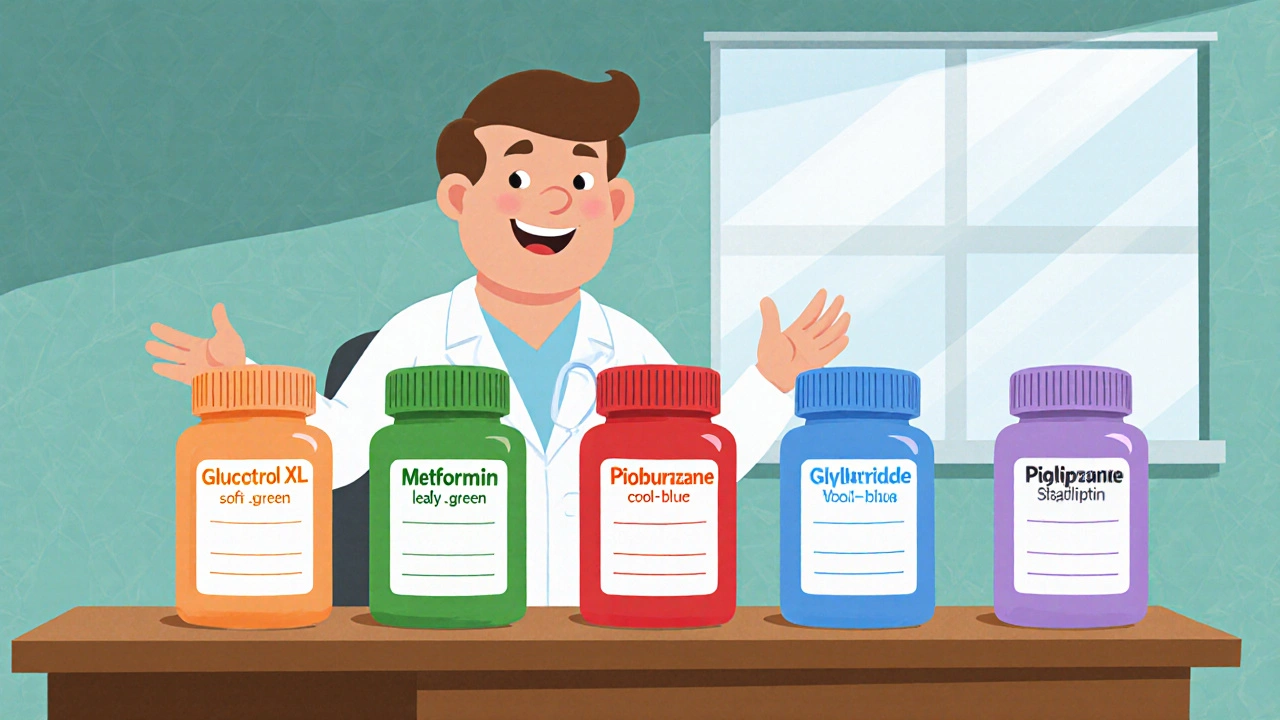
Glucotrol XL vs Other Diabetes Medications: A Practical Comparison
A detailed side‑by‑side look at Glucotrol XL (glipizide) versus common oral diabetes drugs, covering mechanisms, dosing, costs, side effects, and when each option fits best.
When working with Glucotrol XL, an extended‑release tablet of glipizide that lowers blood sugar in adults with type 2 diabetes. Also known as Glipizide XL, it provides a steady insulin‑stimulating effect over 24 hours, making once‑daily dosing possible.
Glucotrol XL is part of the sulfonylurea class, a group of oral hypoglycemics that work by closing potassium channels in pancreatic beta cells. This action triggers an influx of calcium, which then pushes the cells to release more insulin. The result is lower fasting and post‑meal glucose levels, a core goal for managing type 2 diabetes. Because the drug relies on existing beta‑cell function, patients with very low insulin production may see limited benefit. Regular blood glucose monitoring is essential to adjust doses safely and avoid hypoglycemia.
Typical starting doses range from 2 mg to 5 mg taken with breakfast, and the tablet should be swallowed whole—not crushed—to preserve its extended‑release mechanism. Most adults reach a stable dose between 5 mg and 10 mg daily, but the exact amount depends on weight, kidney function, and how well the blood sugar responds. Take it at the same time each day to keep plasma levels steady. If you miss a dose, skip it and resume the next scheduled tablet; doubling up can trigger dangerous low blood sugar.
Common side effects include mild nausea, headache, and occasional dizziness. The most serious risk is hypoglycemia, which may present as shakiness, sweating, or confusion, especially if you skip meals or combine Glucotrol XL with other glucose‑lowering agents. Other warnings cover sulfa‑allergy reactions, renal impairment, and the potential for weight gain due to increased insulin activity. Discuss any history of heart disease, liver problems, or pregnancy with your doctor before starting.
If cost is a concern, the generic version—simply called glipizide—offers the same pharmacologic profile at a lower price. Many insurance plans treat the generic as a preferred drug, so you can save without sacrificing efficacy. However, some patients report a slightly different feel with the brand‑name extended‑release formulation, possibly because the release curve is smoother. Your clinician can help you decide whether the brand or generic fits your lifestyle best.
Understanding how Glucotrol XL fits into your overall diabetes plan is key. It works best when paired with a balanced diet, regular exercise, and routine glucose checks. If you’re curious about the best dosage for your situation, how to handle missed doses, or ways to minimize side effects, the articles below dive into those details. Keep reading to discover practical tips, real‑world experiences, and expert advice that can help you use Glucotrol XL safely and effectively.
A detailed side‑by‑side look at Glucotrol XL (glipizide) versus common oral diabetes drugs, covering mechanisms, dosing, costs, side effects, and when each option fits best.