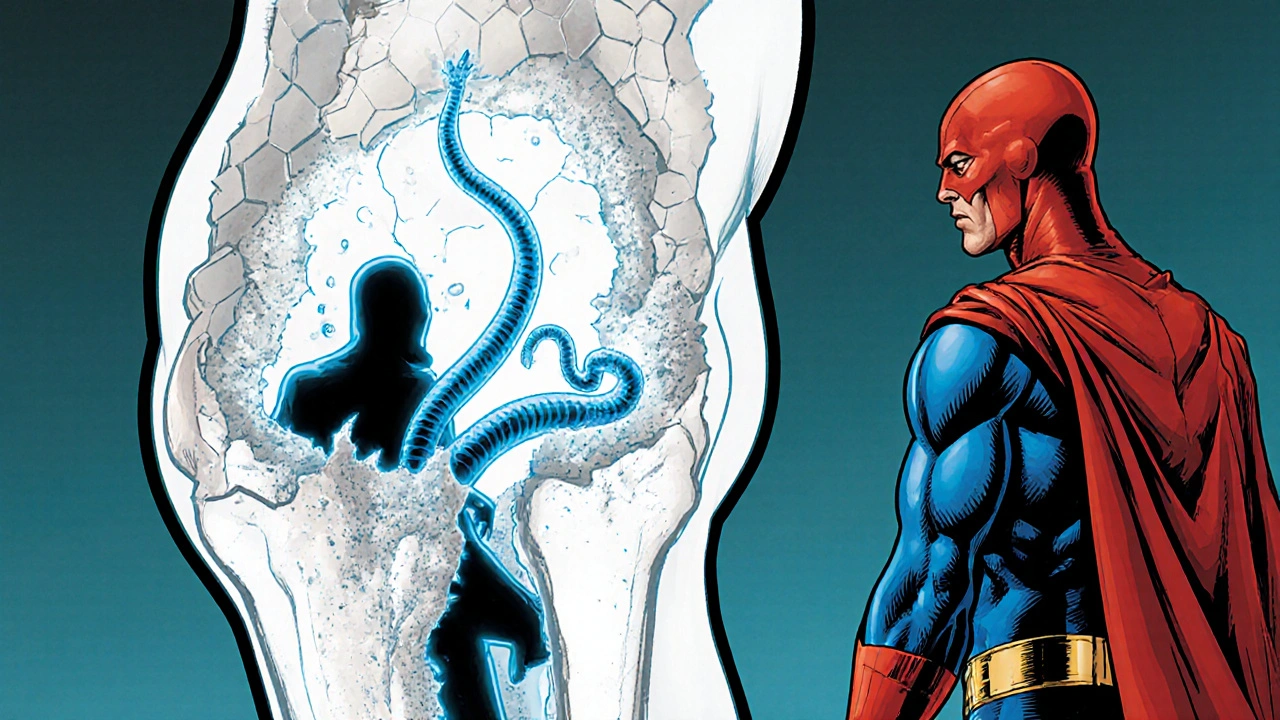
Osteoporosis and Bone Damage: Understanding the Silent Epidemic
Discover how osteoporosis silently damages bones, who’s at risk, how to detect it early, and practical steps to prevent fractures.
When talking about bone loss, the gradual reduction in bone mass and strength that makes bones more fragile. Also called skeletal demineralization, it’s the underlying process behind many serious conditions. One of the most common outcomes is osteoporosis, a disease where bone loss becomes severe enough to cause fractures from minor falls. Another key player is calcium deficiency, which strips the essential mineral that builds and repairs bone tissue. Together, these entities shape a cascade: calcium deficiency fuels bone loss, bone loss can progress to osteoporosis, and osteoporosis dramatically raises fracture risk. Understanding this chain helps you spot early signs and act before damage becomes irreversible.
Beyond nutrition, hormonal shifts play a massive role. Menopause triggers a sharp drop in estrogen, a hormone that normally protects bone by slowing the breakdown process. This hormonal dip accelerates bone loss, especially in the first few years after periods stop. Meanwhile, vitamin D acts like a traffic controller for calcium, helping the gut absorb the mineral and guiding it to where it’s needed in the skeleton. Low vitamin D levels leave calcium stranded, which means the body can’t repair bone efficiently, further worsening bone loss. Age, sedentary lifestyle, and certain medicines—like chronic corticosteroids—also add to the mix, each nudging the balance toward more bone breakdown than building.
Knowing the web of causes lets you tackle bone loss from several angles. Boosting dietary calcium and ensuring adequate vitamin D (through sunlight or supplements) addresses the nutritional side. Weight‑bearing exercise—think brisk walking, resistance training, or dancing—stimulates bone formation, counteracting the hormonal and age‑related decline. For those at high risk, doctors may prescribe medications that slow bone resorption or even rebuild bone density. Monitoring bone health with periodic density scans provides a clear picture of progress. By combining lifestyle tweaks with medical support, you can halt or even reverse the trajectory of bone loss, turning a potential health crisis into a manageable condition.
Discover how osteoporosis silently damages bones, who’s at risk, how to detect it early, and practical steps to prevent fractures.