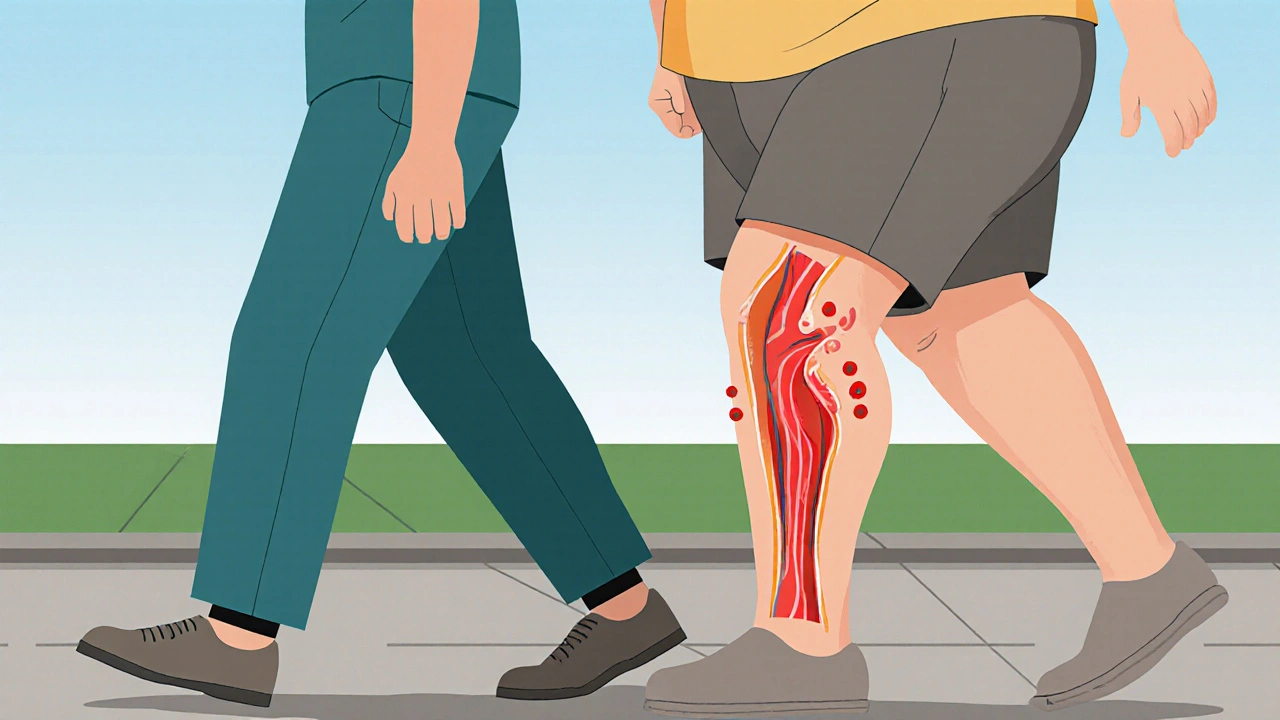
Obesity’s Effect on Intermittent Claudication and How to Lose Weight
Explore how obesity worsens intermittent claudication, how weight loss improves symptoms, and practical steps to walk pain‑free.
When checking Ankle‑Brachial Index, a quick, non‑invasive ratio of ankle to arm blood pressure used to spot blockages in leg arteries. Also known as ABI, it helps doctors decide if you have peripheral arterial disease or need lifestyle changes.
The ABI is more than a number on a chart; it’s a gateway to understanding Peripheral Arterial Disease, a condition where plaque narrows the arteries supplying your legs. When the ankle pressure drops below the arm pressure, the ABI falls under 0.9, signalling reduced flow. This reduced flow often shows up as Claudication, the aching or cramping you feel after walking a short distance. Spotting PAD early with an ABI can prevent the disease from advancing to critical limb ischemia, which may lead to ulcers or even amputation.
To get an ABI, clinicians use a Doppler ultrasound probe. The device sends sound waves through the skin, picks up the echo from moving blood, and translates it into a readable pressure reading. The same cuff used for blood pressure on the arm is placed on the ankle, and the Doppler helps capture the systolic pressure in both locations. The ratio (ankle pressure ÷ arm pressure) becomes the ABI. A normal ABI ranges from 1.0 to 1.4; values above 1.4 may hint at stiff, calcified arteries that need different assessment.
Why does this matter beyond the legs? Studies show anyone with a low ABI faces a higher Cardiovascular Risk. The same atherosclerotic process that blocks leg arteries often affects heart and brain vessels, raising the odds of heart attack or stroke. That’s why doctors treat a low ABI as a red flag, prompting cholesterol checks, blood sugar monitoring, and aggressive lifestyle advice. The test also guides treatment: mild PAD may be managed with walking programs and aspirin, while more severe cases could need angioplasty or surgery.
Putting the ABI into practice means looking at the whole picture. If you’re over 50, smoke, have diabetes, or notice leg pain while walking, ask your doctor about an ABI. The test takes just a few minutes, costs little, and can change the course of your health by catching problems before they become emergencies. Below you’ll find a mix of articles that dive deeper into the science behind the ABI, explain how to interpret results, compare it with other vascular tests, and share real‑world tips for managing the conditions it uncovers.
Explore how obesity worsens intermittent claudication, how weight loss improves symptoms, and practical steps to walk pain‑free.