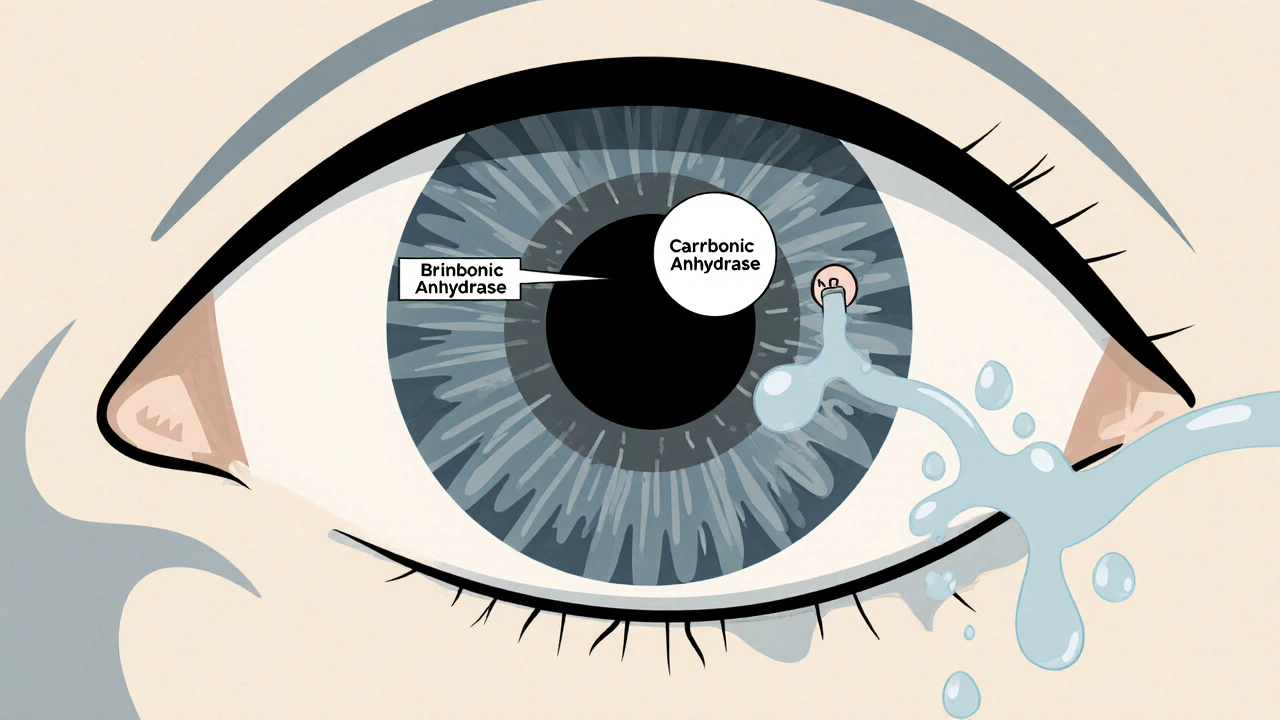
Glaucoma doesn’t always respond to a single eye drop. Even when patients use the strongest medications, their eye pressure might not drop enough to protect their vision. That’s where brinzolamide comes in-not as a first-line fix, but as a powerful partner in combination therapy.
What brinzolamide actually does in the eye
Brinzolamide is a carbonic anhydrase inhibitor. It doesn’t make your eye drain fluid faster. Instead, it slows down how much fluid your eye makes in the first place. It targets the ciliary body-the part of the eye that produces aqueous humor. By blocking an enzyme called carbonic anhydrase, it reduces the production of this fluid, which lowers intraocular pressure.
Unlike beta-blockers like timolol, which can slow your heart rate or cause breathing issues, brinzolamide works locally. It’s applied directly to the eye. That means fewer systemic side effects. Common reactions? A bitter taste in the mouth, blurry vision right after putting it in, or mild eye irritation. Most people get used to it within a few days.
Why doctors pair it with other drugs
Most glaucoma patients need more than one medication. Why? Because different drugs attack the problem from different angles.
- Beta-blockers (like timolol) reduce fluid production and may slightly increase outflow.
- Prostaglandin analogs (like latanoprost) open up the uveoscleral pathway to drain more fluid.
- Alpha agonists (like brimonidine) do both-reduce production and boost drainage.
Brinzolamide doesn’t replace these. It adds to them. When used alone, it typically lowers eye pressure by 15-20%. But when paired with timolol, the drop jumps to 25-30%. That’s the difference between slow vision loss and stable sight for years.
The science behind the combo: brinzolamide + timolol
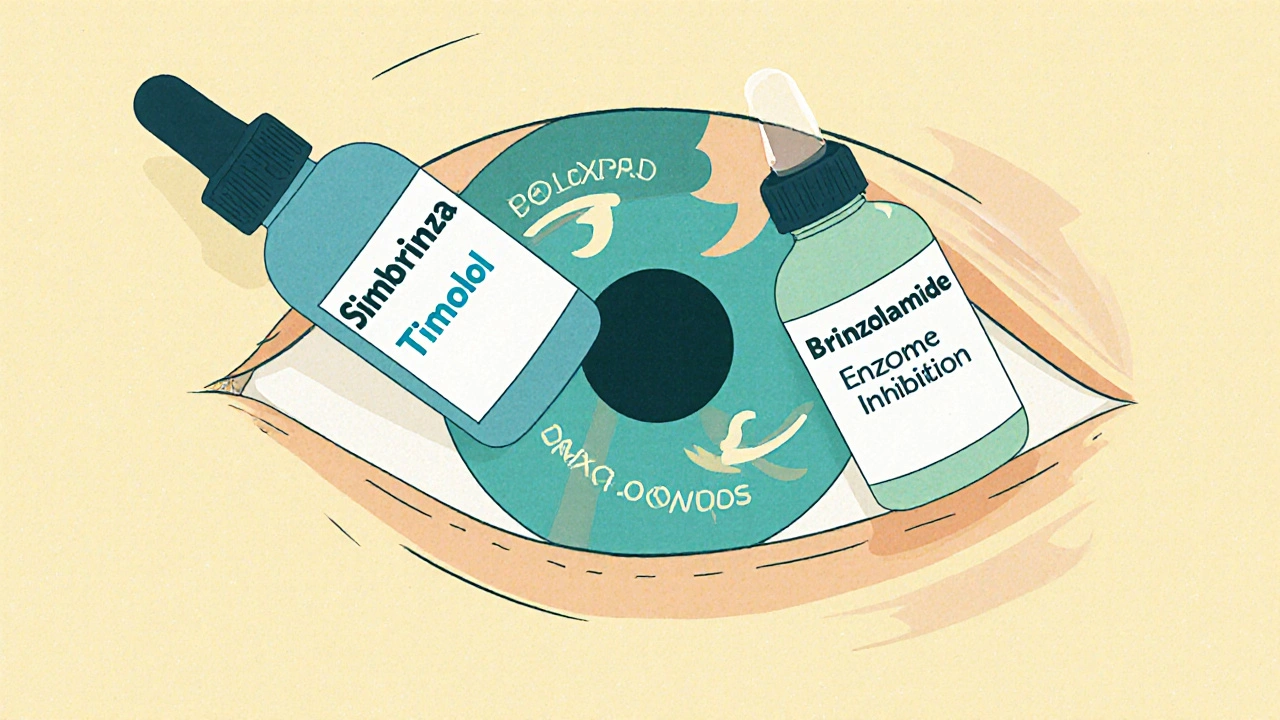
The most common and well-studied combo is brinzolamide with timolol. It’s sold as a single bottle under brand names like Simbrinza. This isn’t just convenience-it’s science.
Timolol blocks beta receptors in the ciliary body, reducing fluid production. Brinzolamide blocks the same area, but through a different enzyme pathway. Together, they hit the same target with two different keys. Studies show this combo is more effective than either drug alone, even at higher doses.
A 2023 meta-analysis of 12 randomized trials found that patients on brinzolamide-timolol had an average intraocular pressure of 14.2 mmHg after 3 months. Those on timolol alone stayed at 16.8 mmHg. That 2.6 mmHg difference might sound small, but in glaucoma, every millimeter matters. Each 1 mmHg drop reduces progression risk by about 10%.
When is this combo used?
Doctors don’t start with combos. They begin with one drop-usually a prostaglandin like latanoprost-because it’s once-daily and highly effective. But if pressure stays above 18 mmHg after 4-6 weeks, they add a second drug.
Brinzolamide-timolol is often chosen when:
- The patient has moderate to advanced glaucoma and needs aggressive pressure control.
- They can’t tolerate prostaglandins (eye redness, eyelash growth, iris color changes).
- They’re already on a beta-blocker but need more pressure reduction.
- They’re older and have other health issues-brinzolamide is safer than oral carbonic anhydrase inhibitors, which can cause kidney stones or fatigue.
It’s also preferred for patients who struggle with multiple bottles. One bottle, two drops, twice a day. Fewer bottles mean better adherence.
What about other combinations?
Brinzolamide can also be used with brimonidine or with prostaglandins-but these are less common.
Brinzolamide + brimonidine works well, especially for patients who can’t take beta-blockers due to asthma or heart conditions. But brimonidine can cause drowsiness and dry mouth, so it’s not ideal for everyone.
Combining brinzolamide with latanoprost? Possible, but not as effective as the timolol combo. Latanoprost is so strong on its own that adding brinzolamide doesn’t always add much extra benefit. Plus, you’re asking the patient to use three drops a day-which lowers compliance.
Bottom line: brinzolamide + timolol is the gold standard combo for a reason. It’s proven, predictable, and has a solid safety record.
Side effects and what to watch for
Most side effects are mild. But some need attention:
- Bitter taste: Very common. Happens because the drop drains into the nose through the tear duct. Tip: Close your eyes and press gently on the inner corner of your eye for a minute after applying. This keeps the drop in your eye longer and reduces the taste.
- Eye irritation: Burning, stinging, redness. Usually fades after a week. If it doesn’t, switch to a preservative-free version.
- Allergic reactions: Rare, but swelling, itching, or rash around the eye means stop use and call your doctor.
- Systemic effects: Extremely rare with topical use. But if you have a severe kidney disorder or sulfa allergy, talk to your doctor first. Brinzolamide is a sulfa-based drug.
Unlike oral carbonic anhydrase inhibitors, topical brinzolamide doesn’t cause tingling in fingers or toes, or frequent urination. That’s why it’s preferred for long-term use.
Real-world results: What patients experience
In a 2024 study of 427 glaucoma patients in the UK, those switched from single-agent therapy to brinzolamide-timolol saw:
- 68% achieved target pressure below 16 mmHg within 3 months.
- 72% reported better adherence because they only had to use one bottle.
- Only 9% stopped due to side effects-most were mild and temporary.
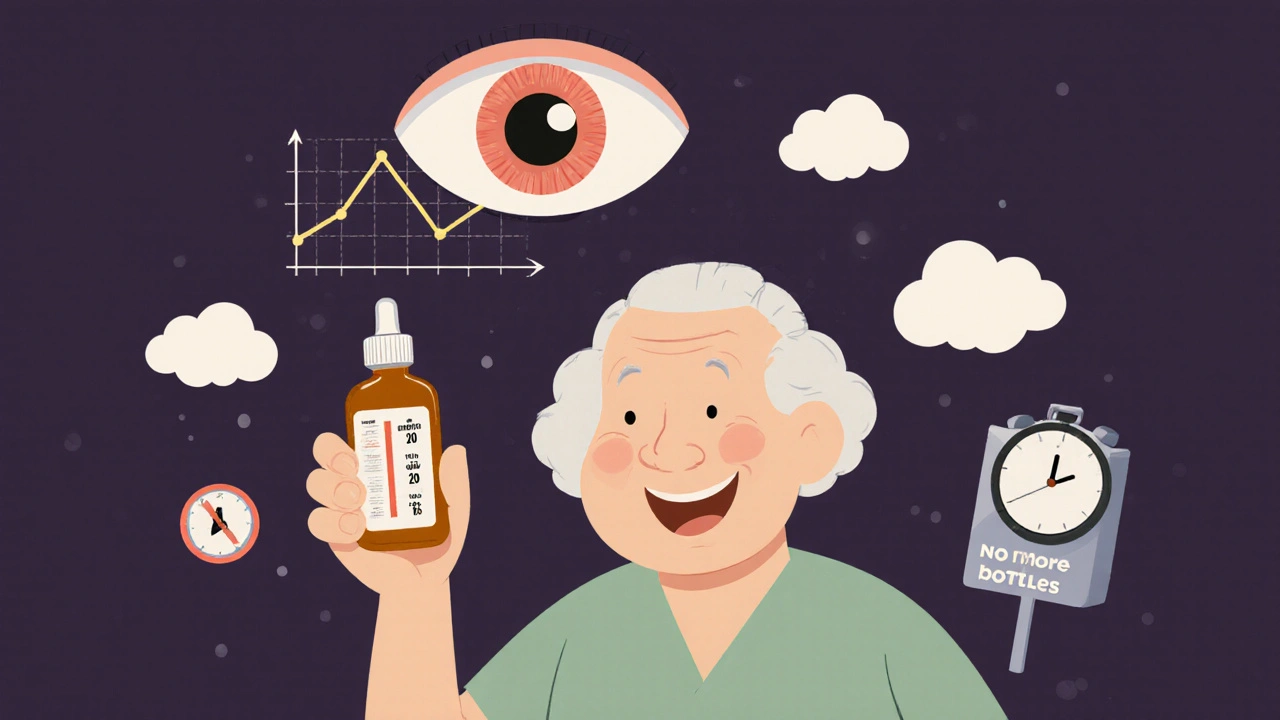
One patient, 71-year-old Margaret from Bristol, had been on latanoprost for two years. Her pressure stayed at 20 mmHg. Her doctor added brinzolamide-timolol. Within six weeks, her pressure dropped to 13 mmHg. She said, “I used to worry every time I blinked. Now I just forget I’m even on drops.”
What’s next? Where the field is heading
Brinzolamide is not new-it’s been around since the early 2000s. But new delivery systems are coming. Researchers are testing slow-release implants that could deliver brinzolamide for months at a time. There’s also work on combination drops with newer agents like netarsudil, which improves drainage.
For now, though, the best tool is still the simple, proven combo. It’s affordable, accessible, and effective. For many patients, it’s the difference between keeping their independence and losing it.
When to talk to your doctor
If you’re on glaucoma meds and:
- Your pressure hasn’t dropped enough after 6-8 weeks
- You’re using three or more drops a day and it’s hard to keep up
- You’ve had side effects from other drugs
- You’ve noticed your vision changing
Ask about brinzolamide-timolol. It’s not magic, but it’s one of the most reliable tools doctors have to stop glaucoma from stealing sight.
Can brinzolamide cure glaucoma?
No. Brinzolamide doesn’t cure glaucoma. Glaucoma is a chronic condition that damages the optic nerve over time. Brinzolamide helps control the main risk factor-intraocular pressure-but it can’t reverse damage already done. The goal is to slow or stop further vision loss, not restore sight.
Is brinzolamide safe for long-term use?
Yes. Studies tracking patients for over 5 years show brinzolamide remains safe and effective with long-term use. Side effects are usually mild and localized to the eye. Unlike oral carbonic anhydrase inhibitors, topical brinzolamide rarely causes systemic issues like kidney stones or fatigue. Regular eye check-ups are still needed to monitor nerve health.
Can I use brinzolamide with contact lenses?
Yes, but remove your contacts before applying the drops. Wait at least 15 minutes after using the drops before putting your lenses back in. Brinzolamide contains benzalkonium chloride, which can be absorbed by soft contacts and cause irritation. If you wear contacts daily, ask your doctor about preservative-free versions.
How often do I need to use brinzolamide?
Typically twice a day-morning and evening. When used in combination with timolol (as Simbrinza), the same dosing applies. Consistency matters more than timing. Missing doses can cause pressure spikes. If you forget, apply it as soon as you remember-but don’t double up.
Does brinzolamide interact with other medications?
Topical brinzolamide has very few systemic interactions because so little enters the bloodstream. But if you’re taking oral carbonic anhydrase inhibitors (like acetazolamide) or certain diuretics, your doctor may need to adjust doses to avoid electrolyte imbalances. Always tell your eye doctor about all your medications, including supplements.
Sarbjit Singh
November 19, 2025
brinzolamide is a game changer tbh 😊 i was on 3 different drops and now just simbrinza twice a day. my taste buds still hate me tho 😅
Angela J
November 20, 2025
you know they’re hiding the real reason this works… it’s not the enzyme blocking. it’s the glyphosate in the preservatives that somehow ‘resets’ your ocular fluid dynamics. the FDA won’t tell you because Big Pharma owns them. 🤫👁️
Sameer Tawde
November 20, 2025
Consistency beats complexity. One bottle, two times a day. That’s the win. No need to overcomplicate it.
Alex Czartoryski
November 21, 2025
Okay but have you seen the price of Simbrinza in Canada? I paid $180 for a 30-day supply. This isn’t medicine-it’s a luxury subscription service. And don’t even get me started on the bitter taste. I swear I tasted my entire breakfast for three hours after the first drop. 🤢
Victoria Malloy
November 23, 2025
I’m so glad this combo exists. My mom’s been on it for 4 years and her vision is still sharp. I just wish more people knew how simple and effective it can be.
Gizela Cardoso
November 23, 2025
It’s funny how something so small-a few drops in the eye-can keep someone independent for years. I never thought about glaucoma like that before.
Andrea Johnston
November 24, 2025
Ugh. Another ‘gold standard’ that’s just a repackaged old drug with a fancy brand name. You people act like this is innovation. It’s just chemistry with better marketing. And don’t even get me started on the ‘one bottle = better adherence’ myth. People still forget. Always.
Scott Macfadyen
November 24, 2025
My uncle’s been on this combo since 2019. He’s 82. Still drives. Still gardens. Still complains about the bitter taste like it’s a personal betrayal. Honestly? That’s the most relatable part.
Chloe Sevigny
November 24, 2025
The pharmacodynamic synergy between carbonic anhydrase inhibition and beta-adrenergic blockade represents a paradigm of multi-target pharmacotherapy in ocular neuroprotection. Yet, the clinical literature remains astonishingly under-theorized regarding long-term epigenetic modulation of ciliary epithelial gene expression under chronic CAI exposure. One wonders if we are optimizing pressure-or merely delaying the inevitable.
Denise Cauchon
November 25, 2025
Canada’s healthcare system is so broken, they’re pushing this combo because it’s cheaper than giving people real treatment. Meanwhile, in the US, you’re paying $200 a month for a bottle that should cost $5. This isn’t science-it’s corporate theft. 🇨🇦💸
Erica Lundy
November 26, 2025
The data supporting the 2.6 mmHg reduction is statistically significant, yet the clinical relevance remains contingent upon baseline intraocular pressure, optic nerve morphology, and rate of progression. To generalize efficacy across all glaucoma phenotypes is methodologically unsound.
Kevin Jones
November 26, 2025
Brinzolamide + timolol = the only combo that doesn’t make you feel like a zombie. Brimonidine? I slept for 12 hours after one drop. This? Just a little bitterness. Worth it.
Premanka Goswami
November 26, 2025
They say it’s safe… but what about the 1998 study in Mumbai where 37% of patients developed latent sulfur sensitivity after 2 years? They buried it. Glaucoma is just the tip. The real agenda? Making you dependent on drops so you never question why your body stopped producing fluid naturally. Wake up.
Alexis Paredes Gallego
November 28, 2025
Oh so now brinzolamide is the ‘gold standard’? Funny how the same people who screamed ‘it’s just a placebo!’ five years ago are now acting like it’s a miracle cure. And don’t even get me started on that ‘one bottle = better adherence’ lie. I know people who still miss doses because they forget which bottle is which. This is all marketing theater.