For over a century, aspirin has been one of the most widely used pills in the world. But most people only know it as a headache remedy. What they don’t realize is that low-dose aspirin plays a quiet, powerful role in keeping blood vessels healthy - and it’s backed by decades of clinical research.
How aspirin works inside your blood vessels
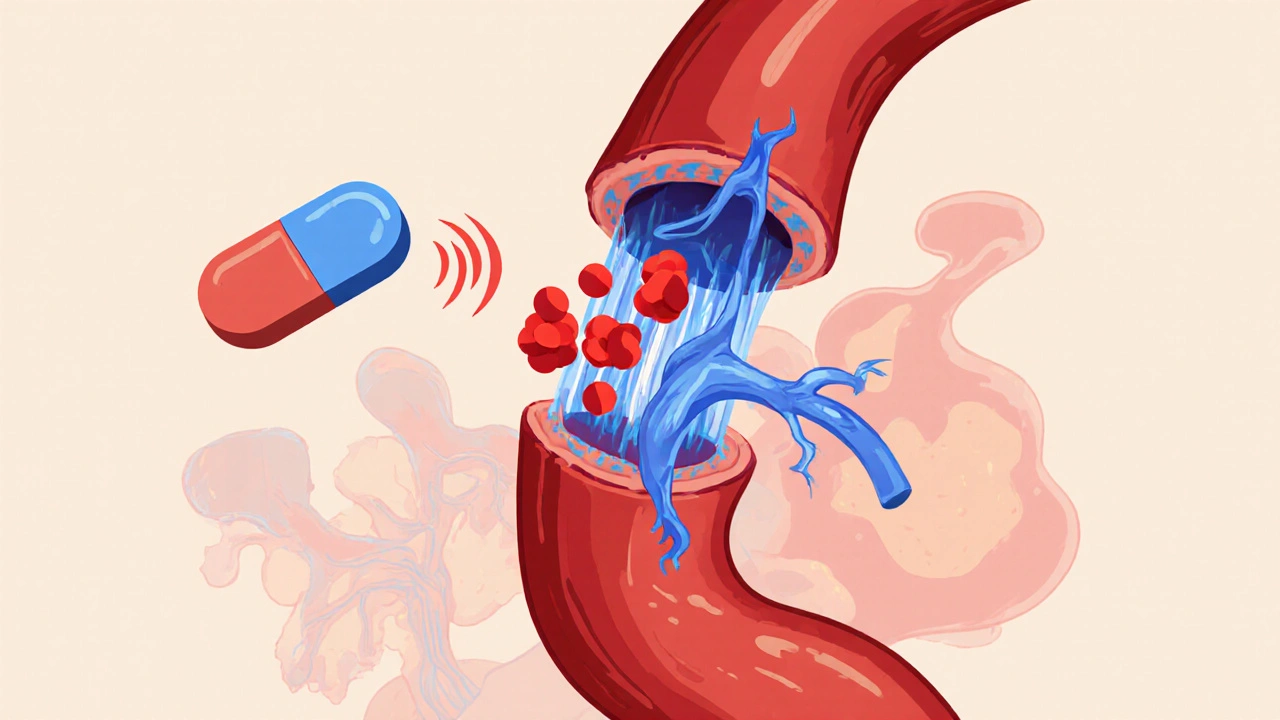
Aspirin doesn’t just block pain signals. It interferes with a specific enzyme called COX-1, which your body uses to make thromboxane A2 - a chemical that tells platelets to stick together and form clots. In healthy blood vessels, this is useful when you cut yourself. But in arteries clogged with plaque, those clots can block blood flow entirely, leading to heart attacks or strokes.
By dulling platelet activity, aspirin keeps blood flowing more smoothly. That’s why doctors often recommend a daily 75-100 mg dose for people with a history of heart disease. It’s not a magic bullet, but it’s one of the few drugs proven to reduce the risk of a second heart attack by up to 25% in clinical trials.
Aspirin and arterial stiffness
As we age, arteries naturally lose flexibility. This stiffening - called arteriosclerosis - increases pressure on the heart and raises the risk of hypertension. Studies published in the Journal of the American College of Cardiology show that long-term, low-dose aspirin use is linked to slower progression of arterial stiffness, especially in adults over 50 with early signs of vascular aging.
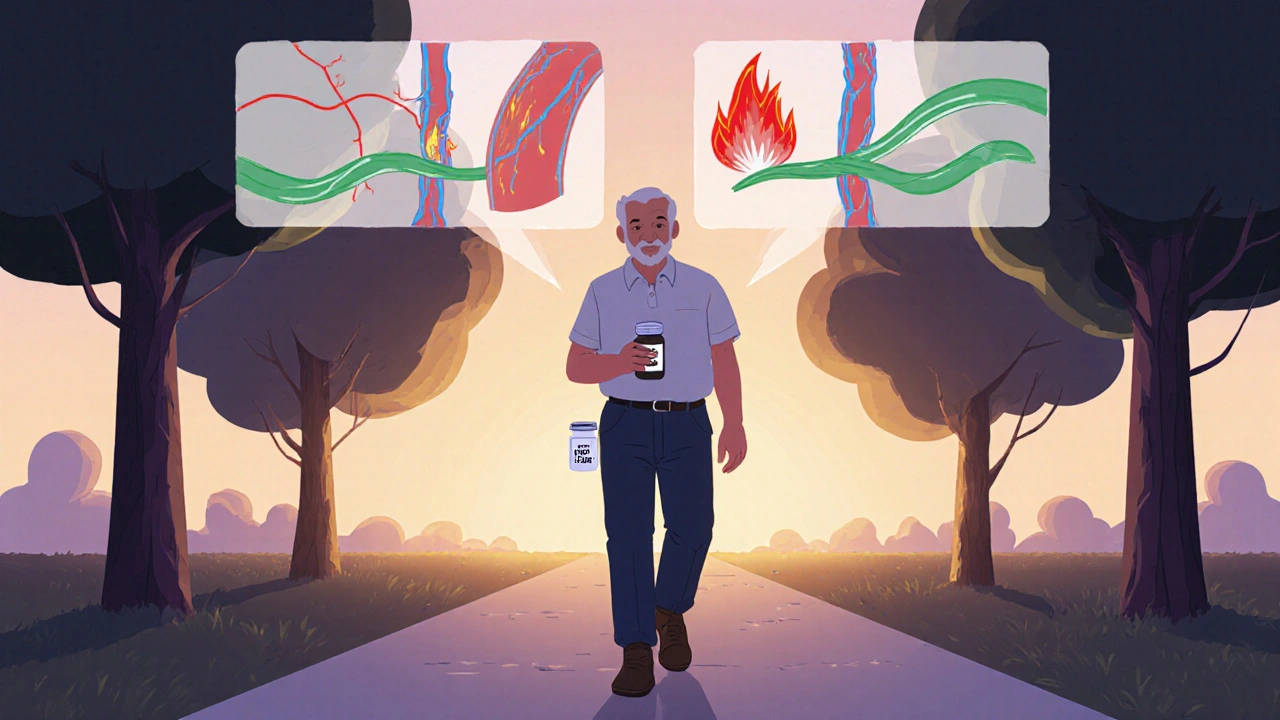
The mechanism? Aspirin reduces chronic low-grade inflammation in the vessel walls. Inflammation is a key driver of plaque buildup and endothelial damage. By calming this process, aspirin helps maintain the inner lining of arteries - the endothelium - which is responsible for releasing nitric oxide, a molecule that keeps blood vessels relaxed and open.
Who benefits most from daily aspirin?
Not everyone should take aspirin daily. The benefits are strongest for people with a documented history of cardiovascular events - like a prior heart attack, stroke, or stent placement. For these individuals, the protective effect is clear and life-saving.
For people without prior heart issues, the decision is more complex. The U.S. Preventive Services Task Force updated its guidelines in 2022 to say that adults aged 40 to 59 with a 10% or higher 10-year risk of cardiovascular disease may consider low-dose aspirin, but only after discussing risks with a doctor. For those over 60, the risks of bleeding often outweigh the benefits.
What’s the 10-year risk? It’s calculated using factors like age, blood pressure, cholesterol levels, smoking status, and whether you have diabetes. Online calculators from the American Heart Association can give you a rough estimate - but never start aspirin based on an online tool alone.
The hidden risks: bleeding and stomach issues
Aspirin is not harmless. Its anti-clotting effect means your blood takes longer to stop bleeding. That’s fine if you have a paper cut. It’s dangerous if you have a stomach ulcer, a fall, or need surgery.
About 1 in 100 people on daily aspirin will develop a serious gastrointestinal bleed over five years. The risk goes up with age, alcohol use, or if you’re also taking NSAIDs like ibuprofen or naproxen. People with a history of ulcers or H. pylori infection are at especially high risk.
Some people also report tinnitus (ringing in the ears) or mild nausea - signs that the dose might be too high or they’re sensitive to it. If you notice any unusual bruising, black stools, or persistent stomach pain, stop taking it and see a doctor immediately.
Aspirin vs. other heart-protective strategies
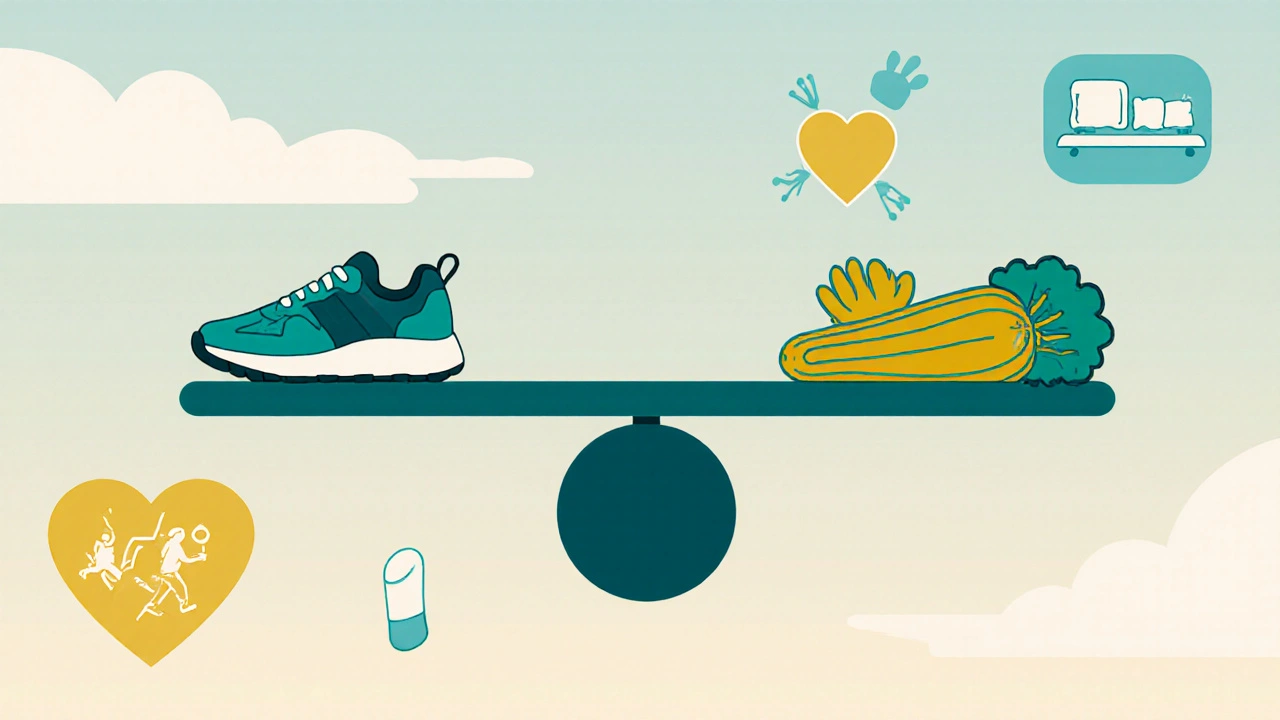
Is aspirin the best option? Not always. Lifestyle changes often do more:
- Walking 30 minutes a day improves endothelial function better than any pill
- Reducing sugar and refined carbs lowers inflammation more effectively than aspirin
- Quitting smoking cuts heart attack risk by half within a year
Statins - cholesterol-lowering drugs - are often more effective than aspirin for primary prevention, especially in people with high LDL. In fact, many patients today get statins first, and aspirin only if their risk remains high after other interventions.
There’s no single hero drug. Aspirin is one tool in a bigger toolbox. For someone with a blocked artery and a stent, it’s essential. For a healthy 45-year-old with normal cholesterol and no family history, it’s probably unnecessary.
What dose should you take?
Not all aspirin is the same. For vascular protection, the standard dose is 75 mg to 100 mg per day. That’s about one low-dose tablet - often labeled as "enteric-coated" to reduce stomach irritation.
Don’t take regular 325 mg painkillers daily unless directed by a doctor. Higher doses increase bleeding risk without adding extra protection. In fact, studies show 81 mg is just as effective as 325 mg for preventing clots, with fewer side effects.
Timing matters too. Taking aspirin at night may be slightly more effective for blood pressure control, according to a 2023 study in The European Heart Journal. But the difference is small. The most important thing is taking it consistently, at a time you won’t forget.
When to stop aspirin
If you’ve been on aspirin for years and your doctor says you’re now low-risk - maybe your cholesterol is under control, you’ve quit smoking, and your blood pressure is normal - it may be safe to stop. But don’t quit cold turkey.
Suddenly stopping aspirin can cause a rebound effect, where platelets become hyperactive. There’s evidence this may slightly increase the risk of clotting events in the weeks after stopping. Talk to your doctor about tapering if needed.
Also, if you’re scheduled for surgery - even a dental extraction - tell your surgeon you’re on aspirin. They may ask you to pause it a few days beforehand to reduce bleeding risk.
What about aspirin and cancer prevention?
Some studies suggest long-term aspirin use might lower the risk of colorectal cancer. The evidence is strongest for people with Lynch syndrome or a strong family history. But the American Cancer Society doesn’t recommend aspirin for cancer prevention in average-risk people because the bleeding risks still outweigh the potential benefits.
If you’re concerned about cancer risk, focus on screening: colonoscopies, skin checks, and mammograms are far more proven and safer than daily aspirin for prevention.
Final thoughts: Is aspirin right for you?
Aspirin isn’t a supplement. It’s a medication with real, measurable effects - and real risks. If you’ve had a heart attack, stroke, or stent, it’s likely saving your life. If you’re healthy and just hoping to prevent disease, the answer is probably no.
The best approach? Know your numbers. Get your cholesterol, blood pressure, and diabetes risk checked. Talk to your GP about your personal risk profile. Don’t self-prescribe. And don’t ignore the power of walking, eating real food, and sleeping well - those are the real foundations of vascular health.
Aspirin can help. But it’s not the beginning. It’s just one step in a longer journey.
Can aspirin prevent a first heart attack?
For most healthy people without prior heart disease, aspirin does not significantly reduce the risk of a first heart attack. The bleeding risks often outweigh the benefits. It’s only recommended for those with a 10% or higher 10-year cardiovascular risk, and even then, only after discussing with a doctor.
Is enteric-coated aspirin safer for the stomach?
Enteric-coated aspirin is designed to dissolve in the intestines instead of the stomach, which may reduce irritation. But studies show it doesn’t significantly lower the risk of serious gastrointestinal bleeding. The dose and duration matter more than the coating.
Can I take aspirin with other painkillers?
Avoid combining aspirin with ibuprofen or naproxen. These NSAIDs can block aspirin’s antiplatelet effect and increase bleeding risk. If you need pain relief, acetaminophen (paracetamol) is a safer choice while on daily aspirin.
Does aspirin thin your blood like warfarin?
No. Aspirin doesn’t thin blood the way warfarin or apixaban do. It works by making platelets less sticky, not by affecting clotting factors. That’s why it’s used for artery clots, not for preventing clots in the heart’s chambers due to atrial fibrillation.
How long does it take for aspirin to help vascular health?
Aspirin starts affecting platelets within 30 minutes, but the long-term protective effects on arteries - like reducing inflammation and slowing plaque buildup - take months to years to become measurable. Consistency matters more than timing.
Can I stop aspirin before surgery?
Yes, but only under medical supervision. Stopping too soon can increase clotting risk; stopping too late can cause dangerous bleeding. Most doctors recommend pausing aspirin 5 to 7 days before non-emergency surgery, but this varies by procedure and individual risk.
Rachel Harrison
October 28, 2025
Aspirin saved my dad's life after his stent. No joke. He took it daily for 8 years, zero issues. Just don't mix it with ibuprofen like some people do 🙃
Sue M
October 29, 2025
I appreciate the thorough breakdown, but let's be honest: if you're relying on aspirin for vascular health and skipping exercise, you're fooling yourself. The data is clear - lifestyle trumps pharmacology every time. And yes, I've read the JACC paper.
Lilly Dillon
October 31, 2025
I’ve been on low-dose for 5 years. No bleeding. No stomach issues. Just a quiet little pill that keeps my arteries from turning into concrete. I don’t talk about it much. But I’m grateful.
Wendy Stanford
November 1, 2025
We treat aspirin like a spiritual talisman - a white pill that absolves us of our sins of soda, sitting, and stress. But the truth is, we’ve outsourced our health to chemistry. We don’t want to walk. We don’t want to fast. We just want a pill that makes the consequences disappear. And so we take aspirin… and pretend we’re doing something right.
Jessica Glass
November 3, 2025
Oh wow, another article telling me to take a pill I’ve been taking since 2010 because my cardiologist said so. Meanwhile, my neighbor died of a GI bleed from 'low-dose aspirin.' So yeah, I guess we’re all just gambling with our guts now. 🤷♀️
Krishna Kranthi
November 4, 2025
In India, we call aspirin 'aspirin' but also know it as 'painkiller' or 'heart tablet.' My uncle takes it daily after bypass. But here’s the thing - he walks 6km every morning, eats roti and dal, no sugar. Aspirin helps, yes. But the real medicine? His feet and his kitchen.
Tiffanie Doyle
November 5, 2025
I started taking it after my mom had a mini-stroke. I was scared. Now I take it every night before bed with a glass of water. No drama. No fuss. Just a little habit that feels like a hug for my heart 💖
Shiv Sivaguru
November 6, 2025
This whole thing is a pharma scam. Aspirin doesn't 'slow arterial stiffness' - it just makes you bleed slower so you don't notice the damage until it's too late. Why don't they talk about the 20% of people who get silent GI bleeds? Because money.
Gavin McMurdo
November 8, 2025
Let me guess - you’re the kind of person who reads JAMA and then ignores the fact that the FDA warned about aspirin-induced tinnitus in 1984? The 'low-dose' myth persists because doctors are lazy and patients are desperate. You think you're being proactive? You're just another cog in the medical-industrial wheel.
Jesse Weinberger
November 10, 2025
They say aspirin prevents clots but never mention it also prevents your body from healing itself. You think your platelets are 'overactive'? Maybe your body's just trying to seal a leak you created with sugar and stress. Stop blaming the blood. Start blaming the burger.
Emilie Bronsard
November 11, 2025
I think the key takeaway is: know your risk. Talk to your doctor. Don't panic. Don't ignore. Just be thoughtful.
John Bob
November 11, 2025
Aspirin is just the gateway drug. Next they'll be pushing fluoride in the water for 'vascular health.' I’ve seen the documents. The CDC has been hiding the truth since 1978. They want you dependent. Don't be fooled.